
An immaculate handover misleads the recipient
Documents written to reassure a receiving team describe the intended path. The knowledge that prevents the first bad week is the list of conditions under which the path fails: ambiguous approvals, an interface that reports failure after a successful write, a credential that lives on one machine, special rows, two systems that disagree.
Procedure and weakness travel together
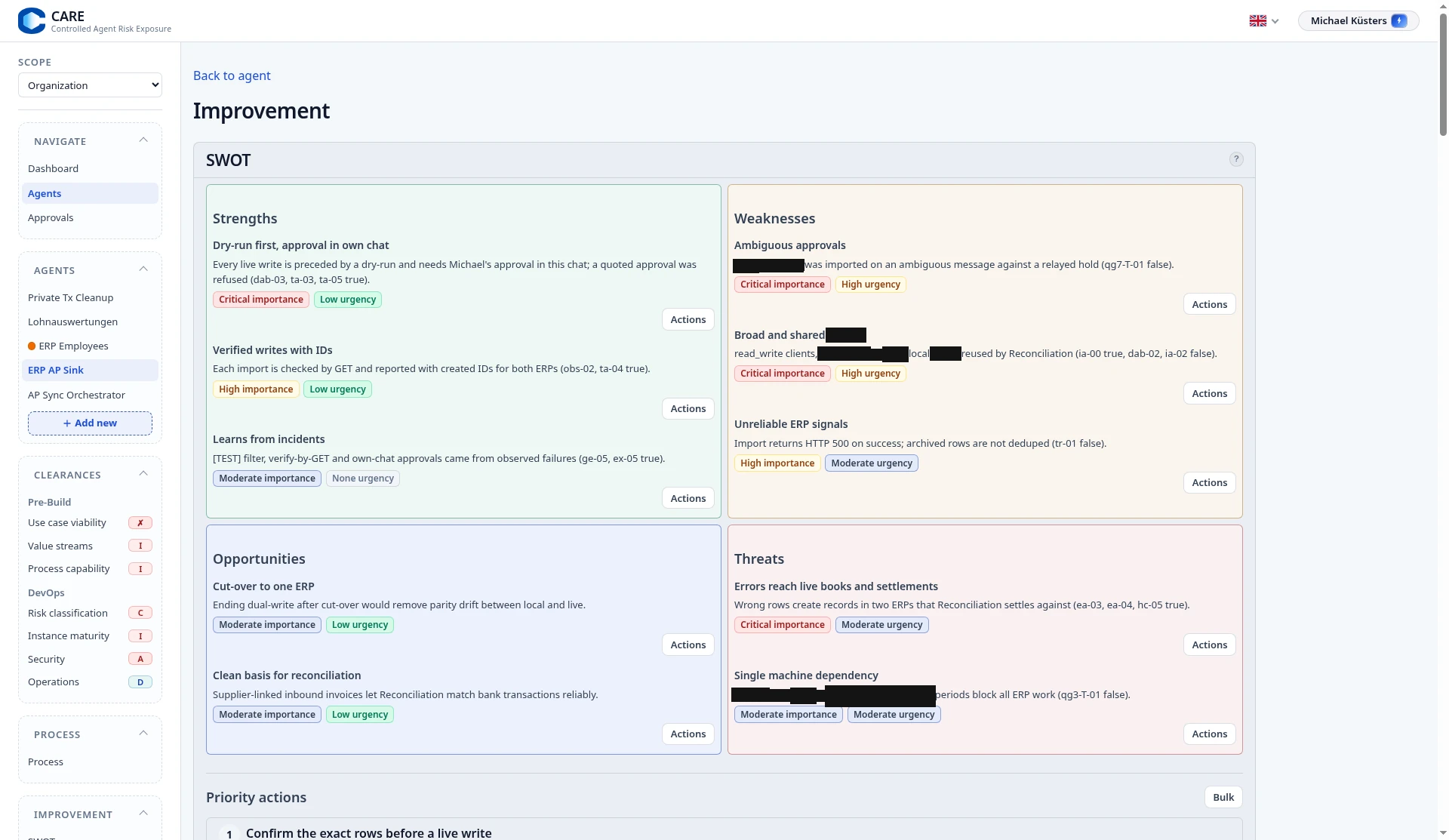
For the demonstrated payables work, the procedure explains import, verification, and recovery from a misleading status. The assessment records concrete weaknesses and threats. The action list proposes fixes and a priority. A recipient can see both the intended run and the current limits. The point is not a longer defect list. The point is that known issues are not waiting to be rediscovered on the far side of the signature.
Use the list to negotiate who carries what
Each defect can take an owner, a target, a temporary workaround, and an acceptance. A receiving provider may support a limited process with known constraints and decline responsibility for an unresolved high-impact failure. That is a legitimate commercial decision. Hiding the defect to win the signature is how the same failure becomes a dispute about the contract.
Structured disclosure makes the negotiation possible. It does not decide it. Management and the future operator decide which gaps close before responsibility moves, which move with a named workaround, and which stay with the original owner.
Transfer on known facts
The owner who is about to hand a process over assembles the package before the term sheet treats the work as routine:
- Pair the procedure with the weakness list. Include the failures you already know how to handle, such as a status that lies, and the ones you do not, such as a missing reversal.
- For each open item, propose an owner after transfer, a workaround, and whether go-live is blocked until it closes.
- Negotiate. Record which gaps the recipient accepts, which you retain, and which must be closed first. A transfer with a silent list is not complete.
You keep the right to decide the operating boundaries while changing who executes the steps. The package can be assembled from the procedure and the findings you already have. What it cannot be is a brochure.
Take action now
- Tell your agent to register itself in CARE: https://ai-managementsystem.com/under-care.
- Let the agent establish the management baseline.
- Use the outcomes.