
The provider may change; the obligations do not
Who may approve a posting, what must never be imported, and where the financial record is authoritative are obligations of the business. A provider can perform the steps. The provider does not become the memory of those obligations, unless you store them nowhere else. Changing providers then means losing the operating model and reconstructing it under time pressure, which is when controls are quietly dropped.
Hold the operating model above the execution technology
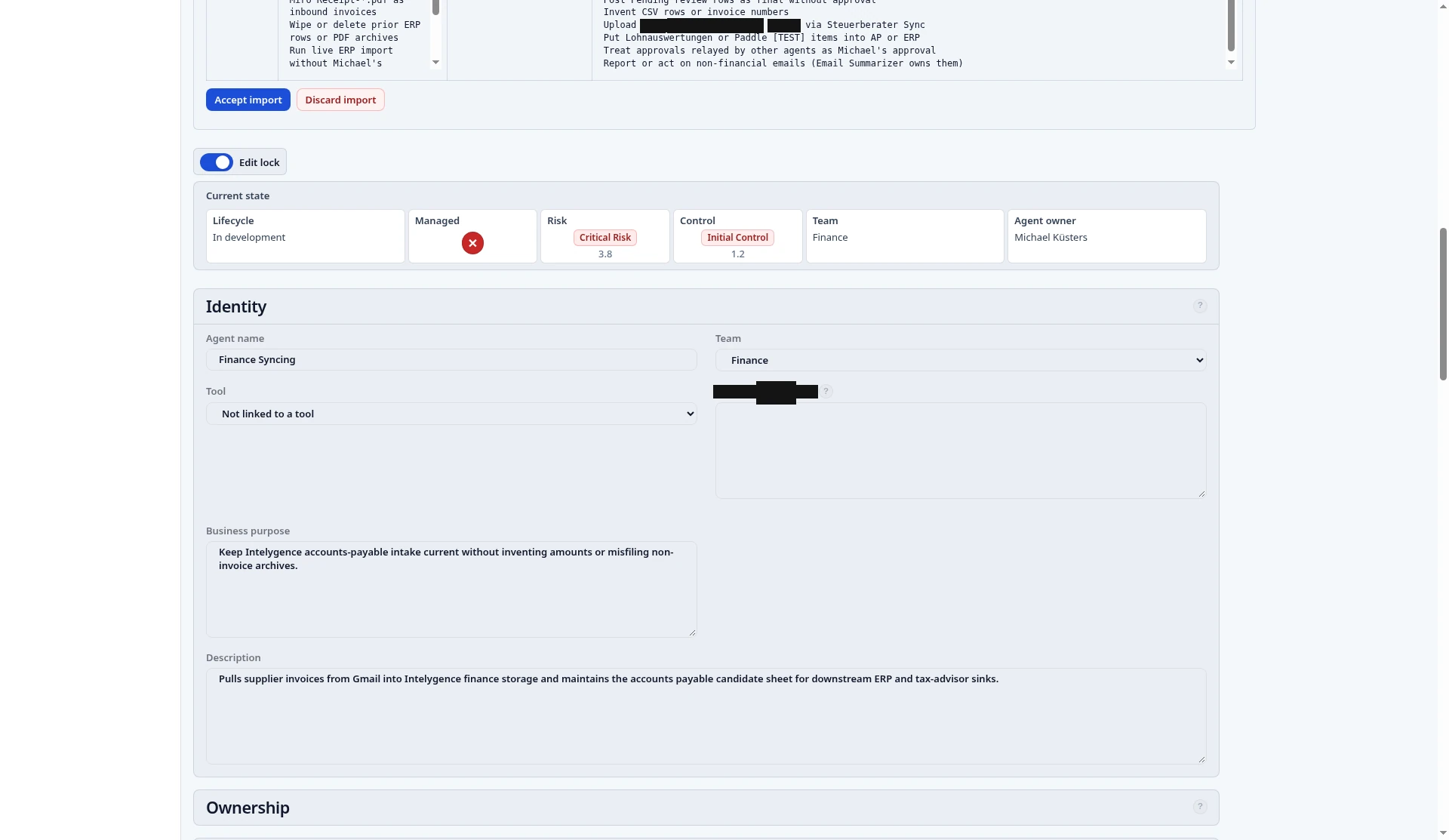
The record you keep is the one you would still need on the morning a contract ends: purpose, the map of inputs and consumers, the procedure, the prohibitions, the approval rule, the findings, and the open gaps. It can be maintained by the people who own the obligation, with help from whoever performs the work. The performer’s draft is input. Acceptance of the model stays with the business.
A demonstrated payables definition already separates those facts from any one runtime: two ERP environments, a named approval, a dry-run, and explicit nevers. That separation is what makes a later move discussable. It does not make the move free of validation.
Assess the new operator against the accepted definition
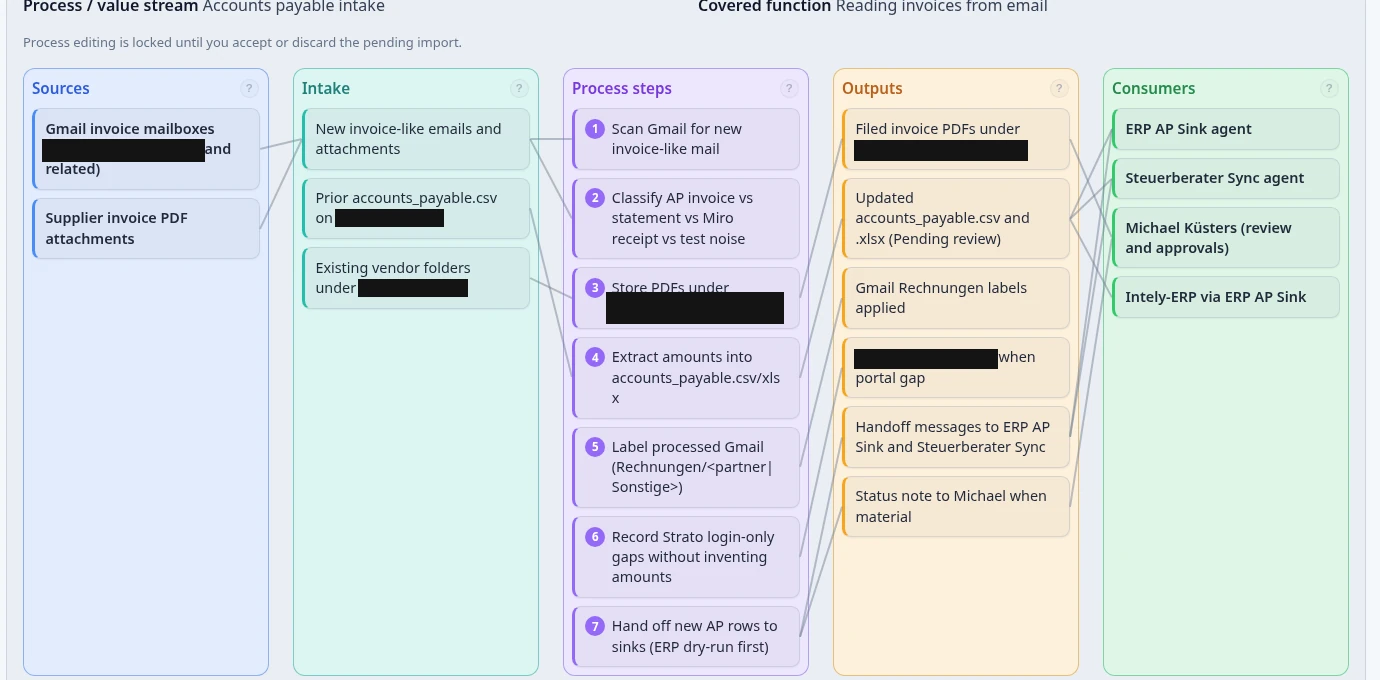
When execution moves, the new operator is assessed against the accepted definition: required inputs, outputs, verification, escalation, and restrictions. Their actual implementation and their access still need checking. A common record makes differences visible. It does not guarantee that a different stack is compatible. Differences found before go-live are the point of the assessment.
Keep the right to decide
Business leadership retains authority over scope, risk acceptance, and operating boundaries across internal delivery, an external provider, and the provider after that. They exercise it by refusing to let the accepted model live only in the provider’s tool.
- Extract the purpose, restrictions, approval rule, and open gaps into a record the provider does not exclusively host. If a fact exists only in their console, copy it out or mark it unknown.
- On a transition, map the new operator’s interfaces and responsibilities onto that record. List the differences before go-live.
- Keep acceptance of scope and of residual risk with the business owner. Stage any change to the model for that owner. The provider may propose. They do not accept on your behalf.
You can outsource execution without outsourcing the decisions that make the process yours. The first extraction can be done from the materials you already use to run the work. A management baseline is the durable home for it. The decision to keep the model is available whether or not that home is in place yet.
Take action now
- Tell your agent to register itself in CARE: https://ai-managementsystem.com/under-care.
- Let the agent establish the management baseline.
- Use the outcomes.