
The cost of an ambiguous yes
A demonstrated payables run recorded an import that proceeded after an ambiguous message, despite a hold that had been relayed rather than given in the owner’s own channel. The weakness was not cultural forgetfulness. The procedure did not require the agent to show the exact intended change and wait for an explicit authorization of that change.
Specify the missing control
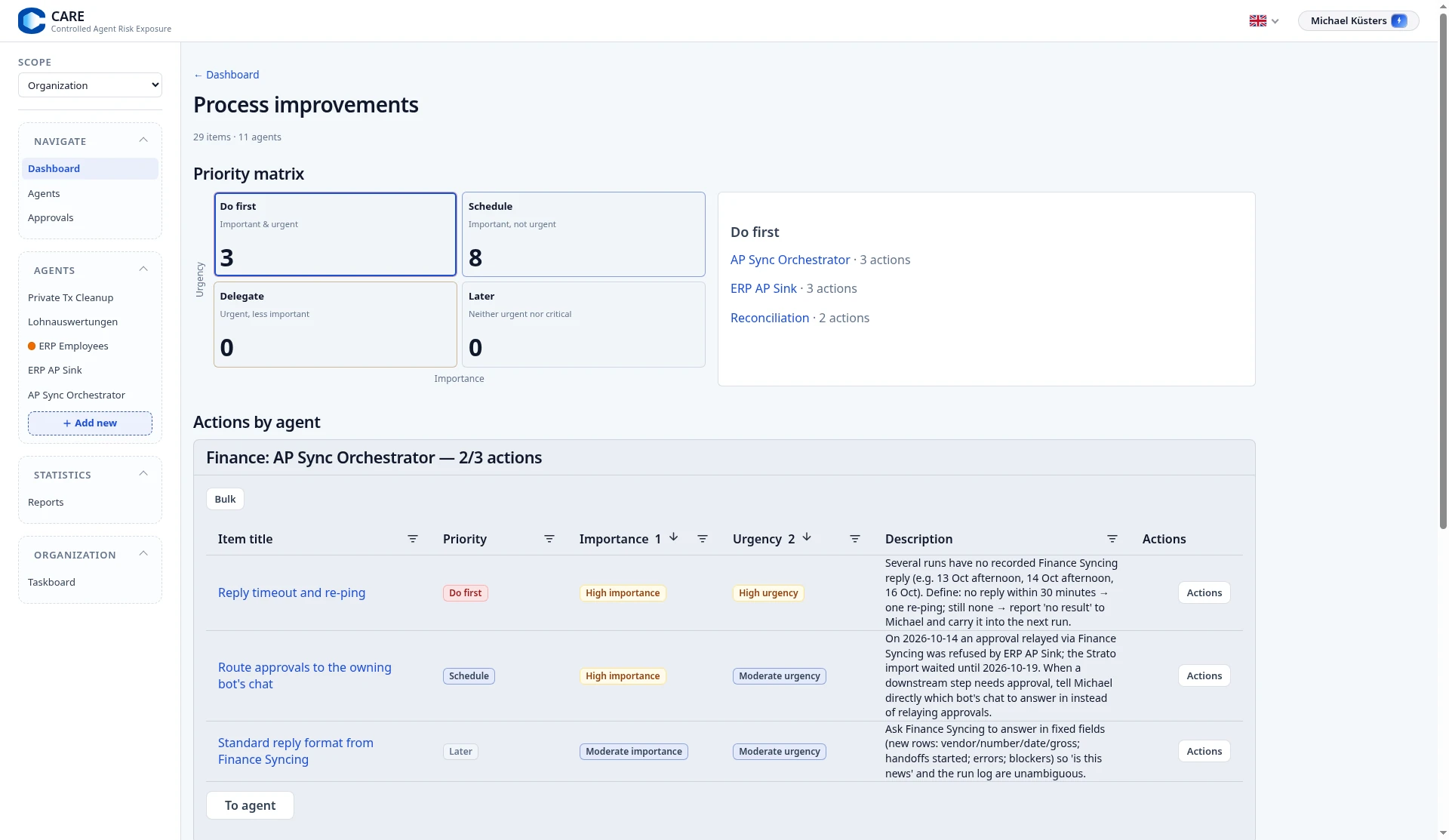
The proposed step sits between the dry-run and the live write. The agent presents the exact rows it intends to write and waits for the owner’s explicit yes to that list, in the designated channel. “X is OK,” and any assent relayed or quoted by another agent, is a request for clarification. It is not authorization. Approved rows can then be compared with written rows. An operation that cannot identify its authorization stops.
That step is a checkpoint, a test case, and an acceptance criterion. It is not yet, by being proposed, the behavior of the system that posts the invoice.
The owner accepts the control and its enforcement
The business owner selects the approval authority and decides whether the proposed procedure is the one they will stand behind. Recording the required behavior is the management decision. Whether the runtime can technically block an unauthorized write is an integration task. Both have owners. Closing one does not close the other.
What “approved” will mean tomorrow
On the process where a vague yes can already move money or a record, the owner institutes the echo before the next live run:
- Define the object: the exact rows, records, or instructions, shown immediately before the write.
- Define the channel and the words that count. Everything else, including a relayed assent, pauses the write.
- Compare what was accepted with what was written on the next run. Assign the technical block if a pause can still be bypassed. Leave that assignment open until it exists.
You will have changed the economics of supervision: ordinary runs proceed after a specific yes, and the owner is no longer asked to reconstruct intent from a chat. The rule can live in the operating baseline the agent is given. The authority to set the rule stays with the owner.
Take action now
- Tell your agent to register itself in CARE: https://ai-managementsystem.com/under-care.
- Let the agent establish the management baseline.
- Use the outcomes.