
Agents act faster than approval committees

Organizations are offered two queues. In one, autonomous systems change their own reach. In the other, every classification, draft, and retry waits for a meeting. The first abandons authority. The second spends the benefit of automation on waiting.
Routine classification versus a change of authority
A support agent categorizes hundreds of cases a day. Reviewing each category is waste. Giving that agent the ability to authorize refunds, without a new decision, is a change of authority wearing the clothes of a small configuration edit.
The same split applies to a finance agent that may classify invoices all day and may not invent an amount or post a live import on an ambiguous yes. The daily run stays fast because the boundary was accepted once. The day someone proposes to move that boundary, a person decides.
Draw the line and measure decision time
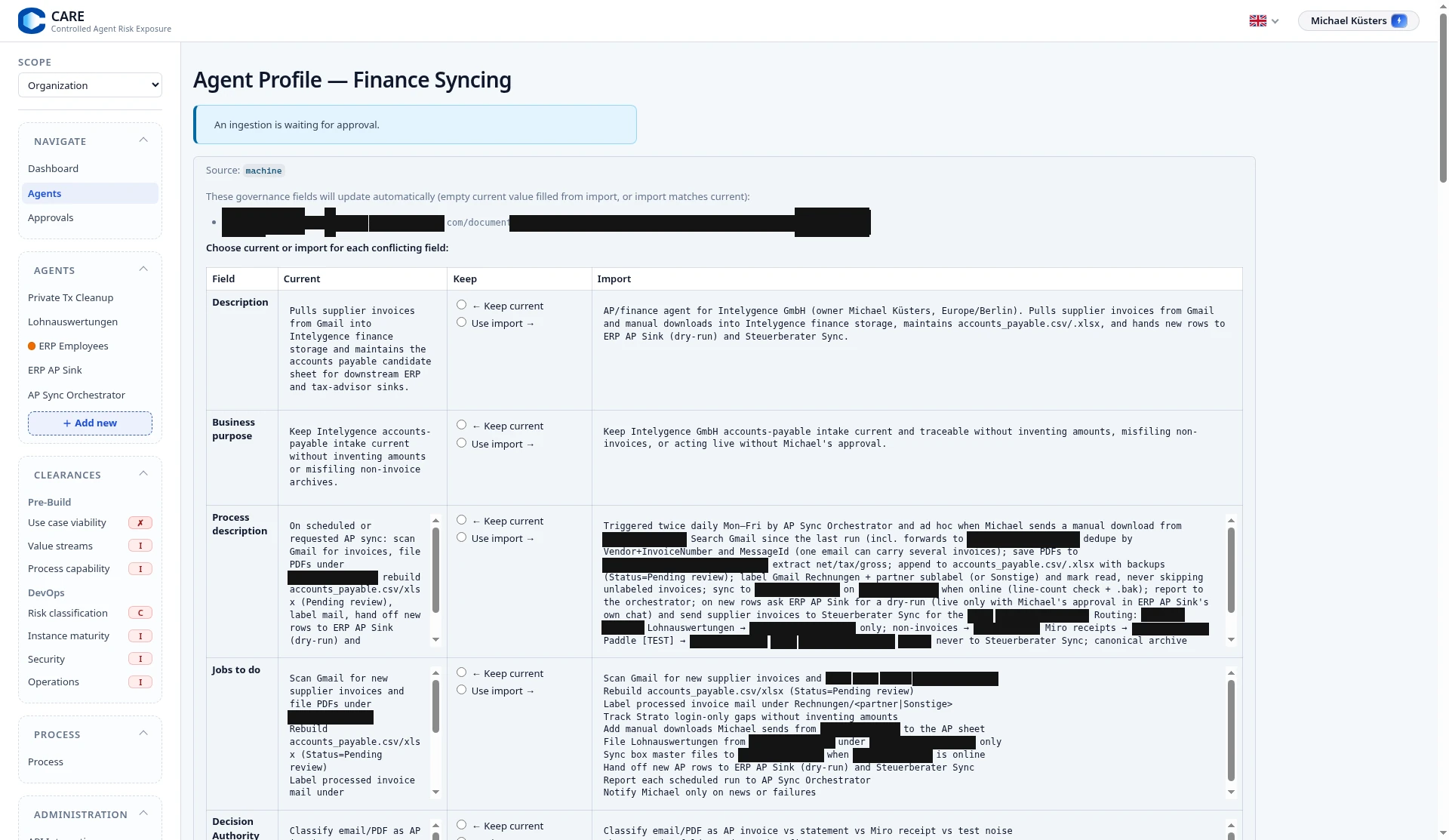
The operating owner draws the line for one agent and then times the decisions that cross it. Agents prepare the description, the missing constraint, and the proposed change. People see the exception and the impact.
- List the actions this agent may take without a fresh human decision. If you cannot list them, it does not yet have an envelope, and high-impact actions stop.
- List the changes that always come back: purpose, permissions, prohibitions, data leaving its current boundary, and anything a customer or a ledger would feel.
- For the next change of that second kind, record the hour it was proposed and the hour it was accepted or refused. That interval is the management latency that matters. Meeting frequency is not.
Speed comes from deciding less, and deciding it faster
The organization keeps the pace of the agents on ordinary work, and keeps a short path on the decisions that change what those agents are allowed to cause.
The result you can show is the two lists and one measured decision time. Management is no longer the queue in front of every action, and it is no longer absent from the action that mattered. Repeat the lists as the portfolio grows. A baseline that stages proposed changes makes the second list operational. The judgment stays with the owner.
Take action now
- Tell your agent to register itself in CARE: https://ai-managementsystem.com/under-care.
- Let the agent establish the management baseline.
- Use the outcomes.