
Documentation can quietly become delegation
An agent discovers it needs another permission, an additional responsibility, or a different downstream consumer. It can say so clearly, and the draft will look like an improvement because it is more accurate. Accuracy is not authorization. If saving the draft replaces the accepted job, the organization has delegated by editing.
Prepare and accept are different acts
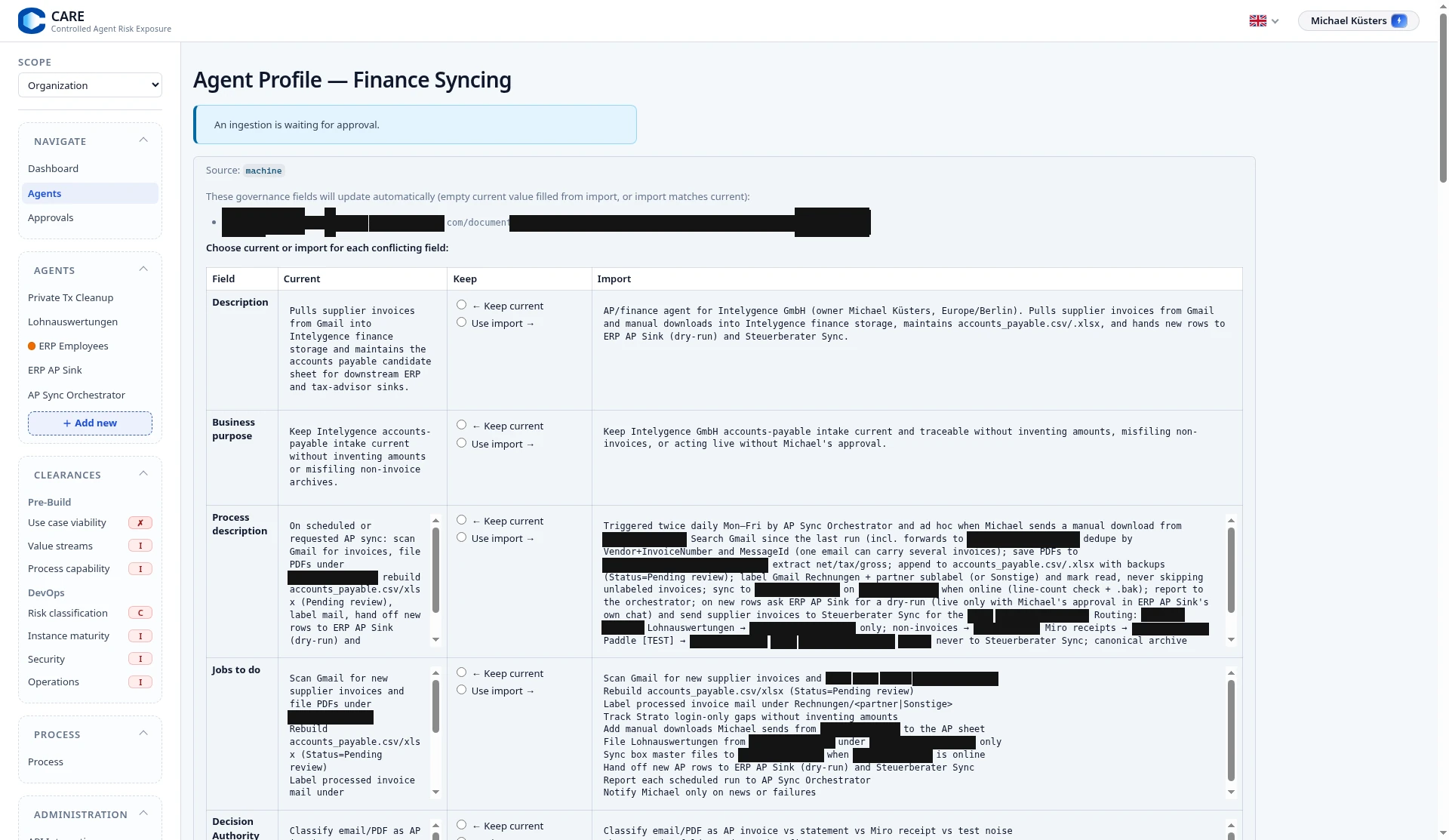
Let the agent describe its current purpose, process, dependencies, limits, and the change it wants. Stage the change. The authorized person decides whether the new role is appropriate. Until that decision, the accepted job is the job. A workflow that stages definitions is one way to keep the two acts apart. Two columns and a named signer are enough to start.
Read a role change against what it can now cause

An added write can change financial exposure. An added recipient can change who sees personal data. A new fallback can add a dependency, including a single machine. Read the revised description together with the map, the prohibitions, the findings, and any evaluation you already trust. The question is the new effect, not the new title.
The same accepted description is what you keep when a different agent, platform, or provider performs the work. Decisions about role and authority stay with the organization. The performer can be replaced. The decision should not be.
Keep the accepted job when the performer changes
The owner of the agent applies this the next time a draft widens the role, and again the day execution is handed to someone else:
- Keep the current definition and the proposed one distinguishable. Do not let the proposal self-apply.
- Review the change for access and for downstream effect. The owner has to be able to see the difference without relying on the proposer’s summary.
- Record the human decision. If you accept a wider authority, name who must grant it in the target system. The description is not that grant.
Delegation and outsourcing then start from an authority you can show, not from whatever the current tool happens to have stored. That is a short decision repeated at each change, which is what keeps management ahead of the agents instead of editing documents after them.
Take action now
- Tell your agent to register itself in CARE: https://ai-managementsystem.com/under-care.
- Let the agent establish the management baseline.
- Use the outcomes.