
The procedure behind the procedure
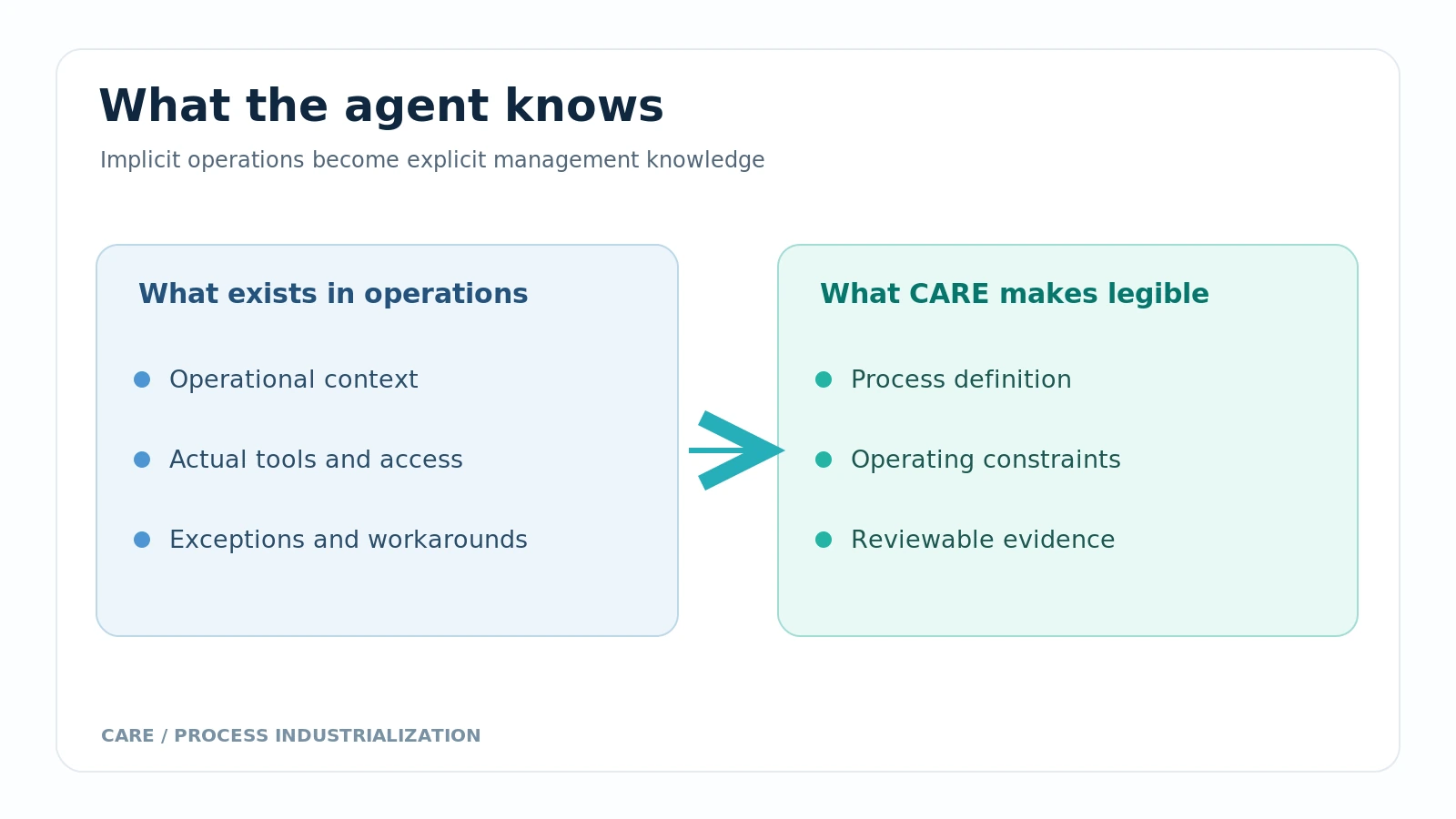
A clean instruction to import invoices can conceal a local-versus-live transition, a spreadsheet fallback, and an API that reports failure after completing the write. The people and the agents who perform the work already navigate those facts. The document often does not, because it was written to describe intent, or written once and left.
Ask the performer for the parts, not a polished story
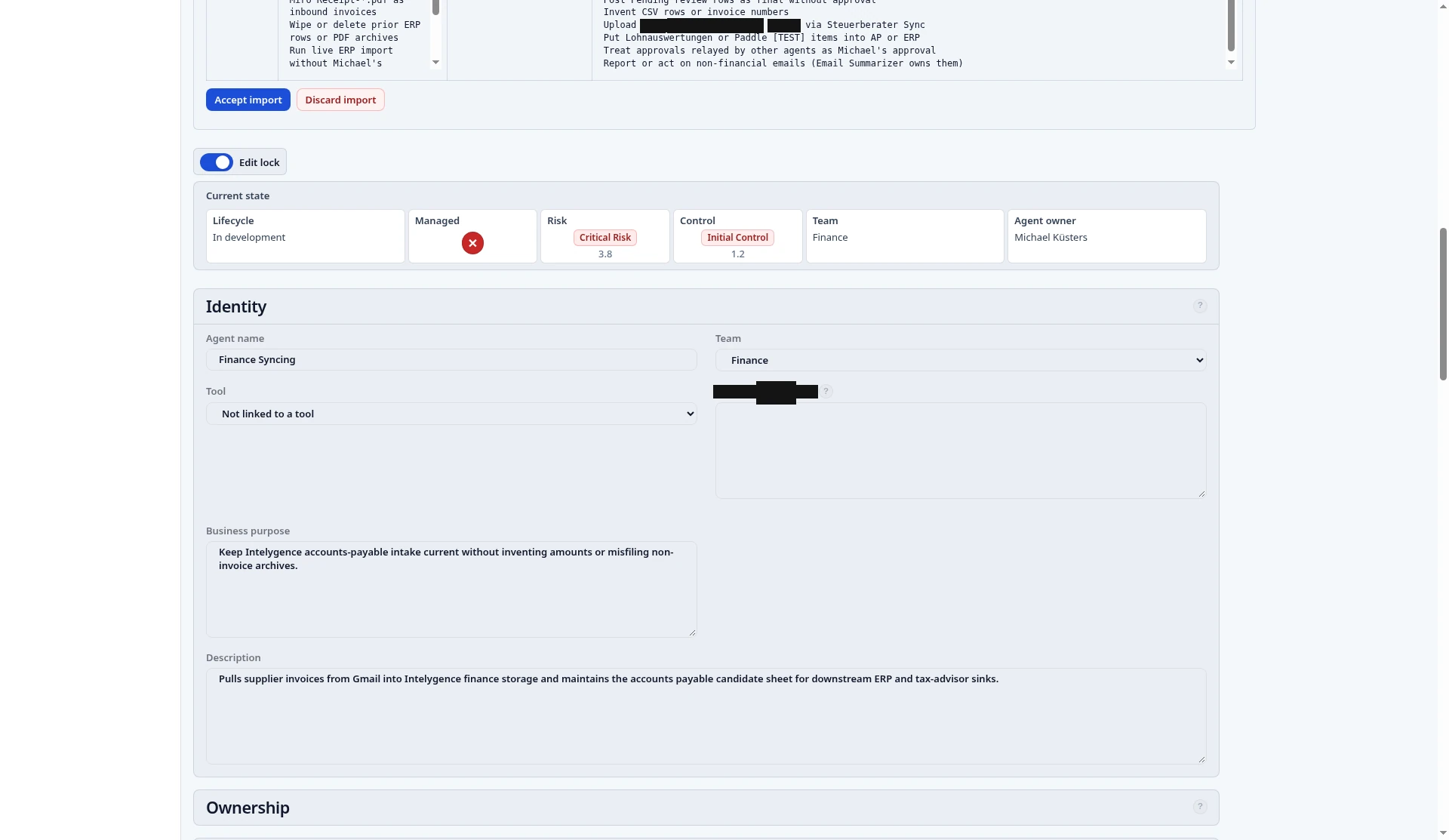
For a demonstrated invoice import, the performer’s account identifies the payables sheet, messages from a coordinating agent, a named approval in chat, two ERP environments, the dry-run and the live write, and the consumer of the resulting records. Those are constituent parts. A narrative of how smoothly the process runs would have hidden them.
Ask your agent, or the person who still does the job, for the same parts. Do not ask for a story suitable for a steering committee.
Knowledge is not yet validation
Self-description omits what the performer has never seen. An agent can name the tool it calls and know nothing of the accounting policy behind the call. The owner compares the draft to incident records, to actual system access, and to what the business expects. Unknowns stay in the record as unknowns. A confident sentence is not a substitute for them.
Establish what is performed before you redesign who performs it
The process owner makes this the first step of any optimization, automation extension, or outsourcing conversation:
- Have the performer list inputs, steps, outputs, exceptions, and dependencies. Compare the list to one recent completed run, including output identifiers and one failure.
- The owner adds what the performer cannot see, and marks what neither of you knows.
- Accept the description as the baseline. Decisions about savings or about a provider come after, and they cite this baseline. They do not replace it with workshop assumptions.
A living baseline is where that definition stays current as the performer learns the next exception. You can take the first description today, from the agent or the person who did yesterday’s run.
Take action now
- Tell your agent to register itself in CARE: https://ai-managementsystem.com/under-care.
- Let the agent establish the management baseline.
- Use the outcomes.