
A yes without a referent authorizes nothing
When an agent asks permission to import financial rows, the approval has to be tied to the objects and the operation. Otherwise the agent, under time pressure, will choose the interpretation that lets the run finish. A demonstrated payables incident showed the consequence: a hold did not survive an ambiguous, relayed assent, and the rows were imported.
Define the object, the identity, and the match
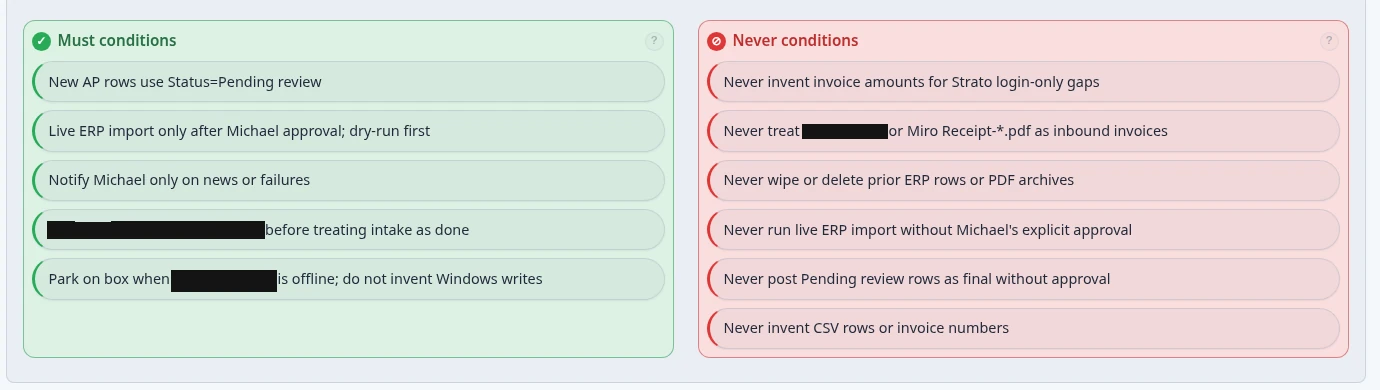
The operating rule in that example requires named-row approval in the owner’s own chat and rejects an approval relayed or quoted by another agent. The further requirement, still a proposal until it is in the run, is to echo the exact rows immediately before the live write and to receive a clear yes to that list. The rows written can then be compared with the rows accepted.
Three checks follow. The object is these rows, not “the import.” The identity is the owner in the designated channel. The alignment is that the written rows equal the accepted rows. Fail any one, and the write is not an approved write.
Separate discussion from authority
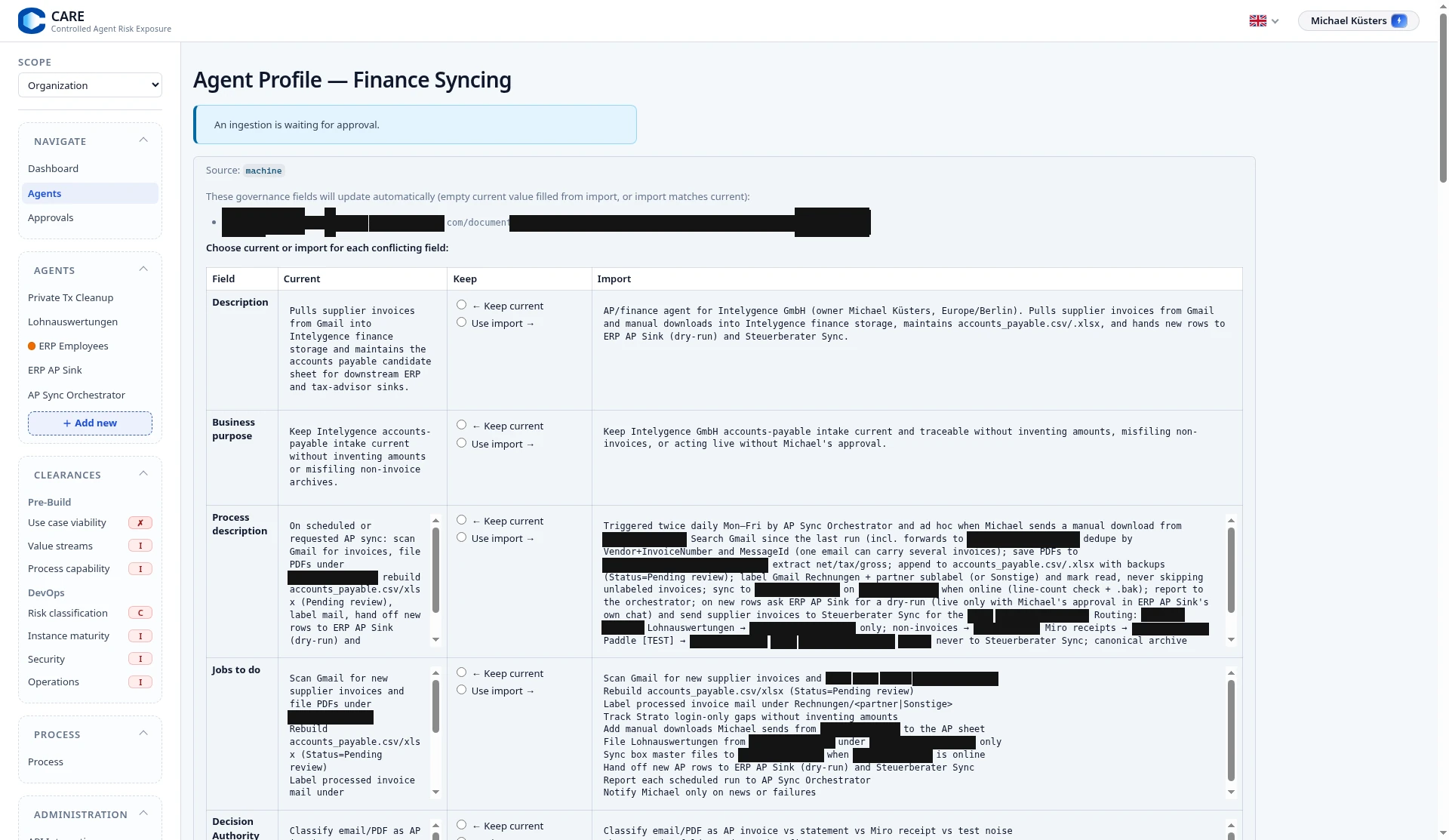
Agents may summarize, advise, and prepare. Preparation is not permission to execute. When two instructions conflict, the agent asks. It does not select the reading that is most convenient for completion. For a consequential transaction, identity, logging, and a technical restriction on the write may also be required in the system that posts. The documented rule is the baseline those measures implement. It is not a substitute for them.
The business keeps the right to say which yes counts
The accountable owner defines the channel and the strength of the control. They can do it for the next posting cycle:
- State the object that a yes must name. Ban the blanket yes.
- State whose decision, in which channel, authorizes the write. Ban relayed and quoted authority.
- On the next run, compare accepted rows to written rows. Record a mismatch as an incident with an owner, not as a rounding error in the chat.
That reconstruction is what finance, audit, and a future provider will ask for. It is also what lets the agent run without a person reading every preparatory message. The management record holds the rule. The owner holds the authority to change the rule. Both can be put in place before the next import.
Take action now
- Tell your agent to register itself in CARE: https://ai-managementsystem.com/under-care.
- Let the agent establish the management baseline.
- Use the outcomes.