
The attractive proposal
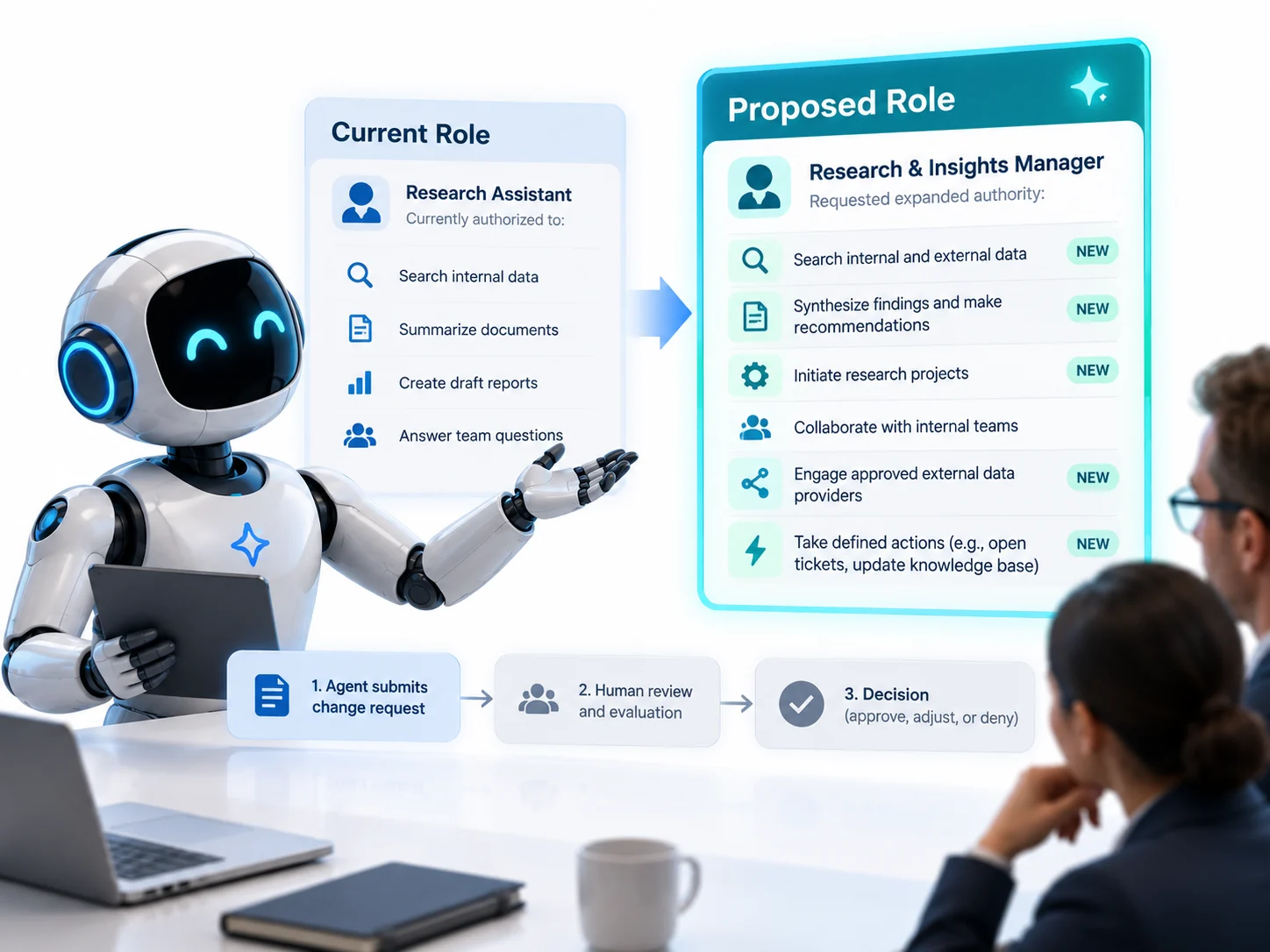
A research assistant that gathers information and writes summaries proposes a wider role: open investigations, contact external systems, and update an internal knowledge base. The business value may be real. The permissions, the external consequences, and the responsibilities are not the ones currently accepted.
Review what the agent could newly cause
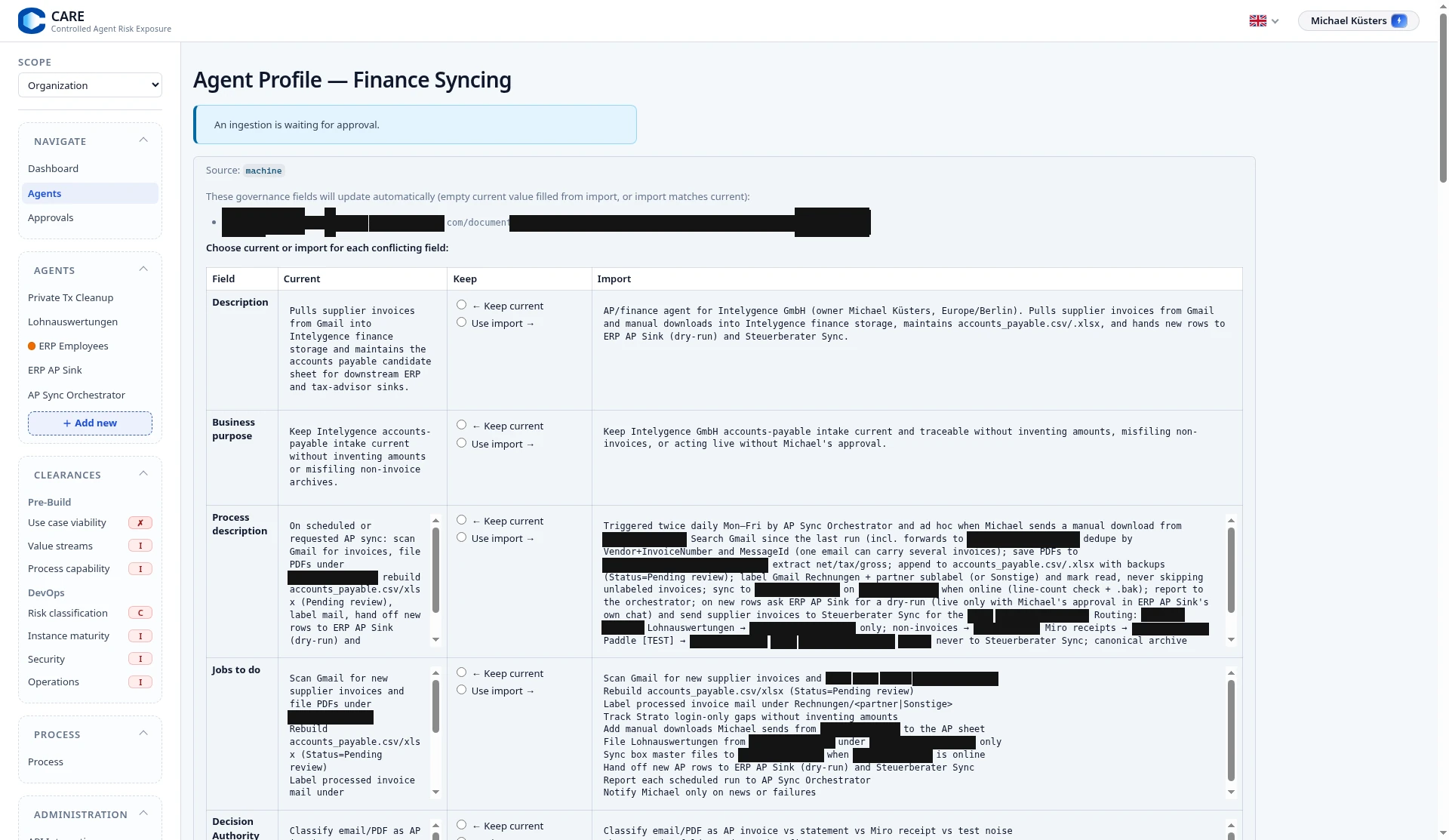
The owner reads effects, not titles. A mild rename can conceal a new write path. A dramatic title can be a more honest label for authority the agent already has. The governing question is what the agent can now cause: new data sources, external commitments, tool access, prohibited activities, outputs, and escalation.
Accepting a description does not grant credentials in the external system, and it does not prove the workflow enforces the description. The platform owner still implements access and checks behavior. That split is what keeps organizational acceptance and technical enforcement attributable to different people.
Accept, narrow, or refuse — and keep the current job until you do
The owner of the agent applies one rule the next time a draft widens the job. There are three legitimate outcomes, and a fourth that is not legitimate: letting the draft replace the accepted definition because it was well written.
- Park the proposal beside the accepted job. Operations continue on the accepted job.
- List the new causes: who is contacted, what is written, what cannot be undone.
- Accept the wider role, accept a narrower slice, or refuse it. If you accept, name the person who must provision the new access and the check that will show the runtime matches the decision.
The agent may design the future. It may not authorize it
Useful widening of the work can happen quickly, because the agent did the thinking. The authority moves only when the owner says so.
The result is a recorded decision on one proposed change, and an accepted definition that still matches what the agent is allowed to do tomorrow morning. That is how a portfolio can absorb good ideas without drifting into jobs nobody granted. A baseline that stages changes makes the parking step ordinary. The yes remains a management act.
Take action now
- Tell your agent to register itself in CARE: https://ai-managementsystem.com/under-care.
- Let the agent establish the management baseline.
- Use the outcomes.