
A harmless name can hide a consequential authority

An ERP-related agent carries a name that suggests routine help. It is documented, available, and useful. The name describes how people feel about it. The questions that matter are which records it can modify, whether a change is reversible, and who authorizes a high-impact transaction.
The moment the description caught up with the work
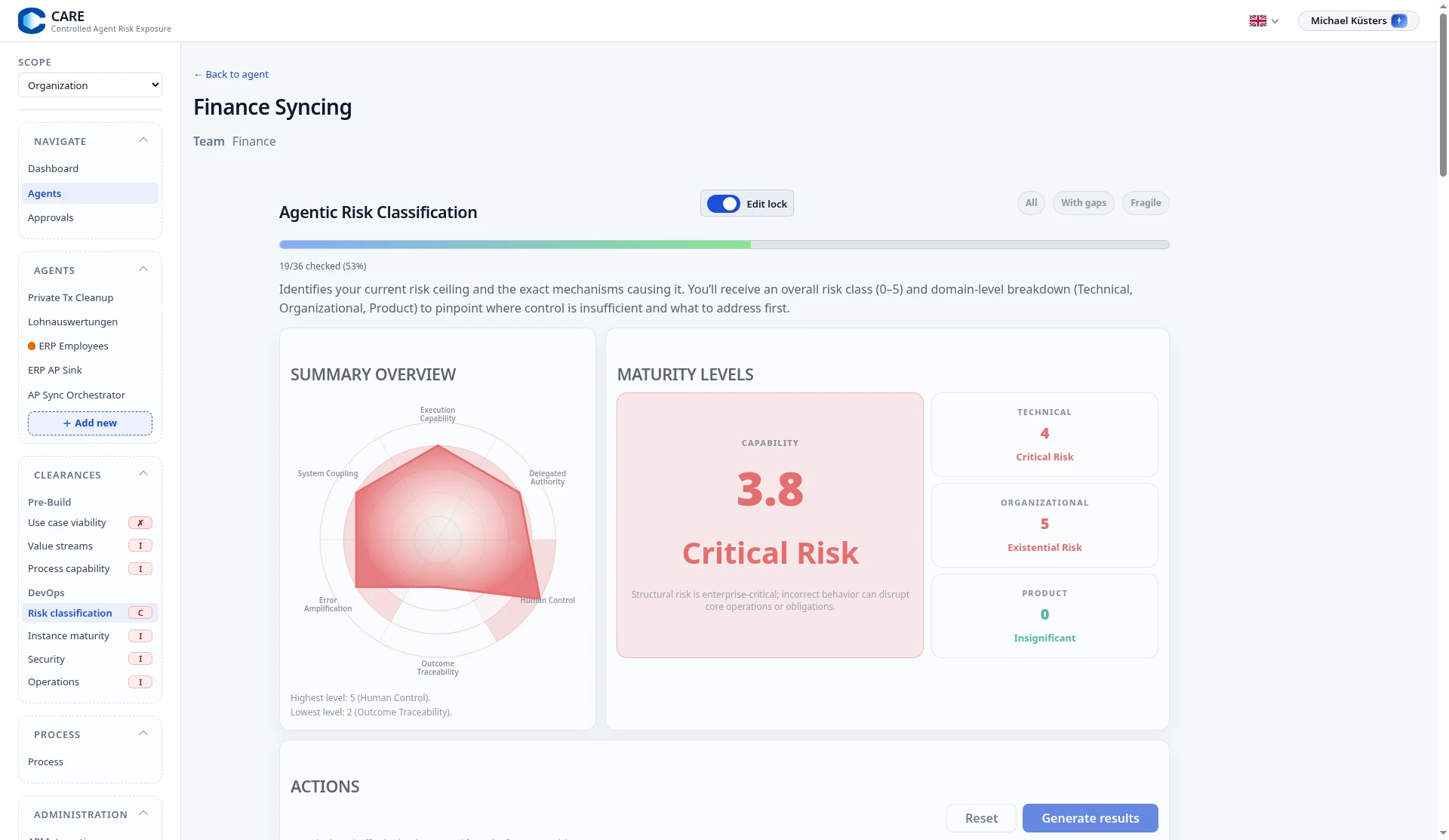
In a worked example discussed by the people who ran it, an ERP agent was renamed to match the financial work it already did. Reassessment placed the arrangement in the highest risk category, because it could affect financial records. The runtime had not received a new capability. Management had received a clearer sentence.
The agent then proposed an approval gate as a mitigation. The proposal was shown to a person, who acknowledged it. Acknowledgement is not deployment. The gate still has to be built in the system that posts the records. A description that proposes its own remedy has not accepted that remedy.
The owner accepts the boundary the description exposed
The process owner treats a material rewrite of what the agent does as a risk decision, even when no tool was added.
- Take one agent whose name is milder than its access. Ask for a description of the records it can change and whether the change is reversible. Replace the friendly name if the description contradicts it.
- Re-rate the arrangement from that description. If the rating moves, the previous acceptance is open again.
- If a control is proposed — an approval before a live write, a second person, a prohibition — record it as a proposal. Accept or reject it by name. If you accept it, assign the implementation in the target system and do not call the risk closed until that implementation exists.
Review the arrangement, not only the changelog
You find a serious exposure while the behavior is still the one you have been running, and you decide whether you meant to authorize it.
The result is a renamed, re-rated agent and a recorded decision on the control it needs. Teams stop reserving scrutiny for release notes. A management record that keeps the description, the risk, the proposal, and the human decision side by side makes the next discovery repeatable. The discovery itself starts with a better sentence, which you can demand today.
Take action now
- Tell your agent to register itself in CARE: https://ai-managementsystem.com/under-care.
- Let the agent establish the management baseline.
- Use the outcomes.