
More proposals require a real acceptance

Automated preparation is valuable because it surfaces missing requirements, a sharper risk, or a wider authority faster than a workshop will. If every observation overwrites the approved definition, the agent has acquired the right to change policy by writing documentation.
From payment recommendation to payment execution
An agent that prepares payment recommendations proposes to send the payment instructions itself. Updating the prose of its role is treated, in the rush, as the approval.
The organization needed a visible difference between proposed, reviewed, and accepted authority. A click on an unchanged screen, or a syntactically valid submission from an unclear identity, is not that difference. Missing material — who is asking, which records, what new exposure — has to stay visibly unresolved.
Stage the change and show the difference
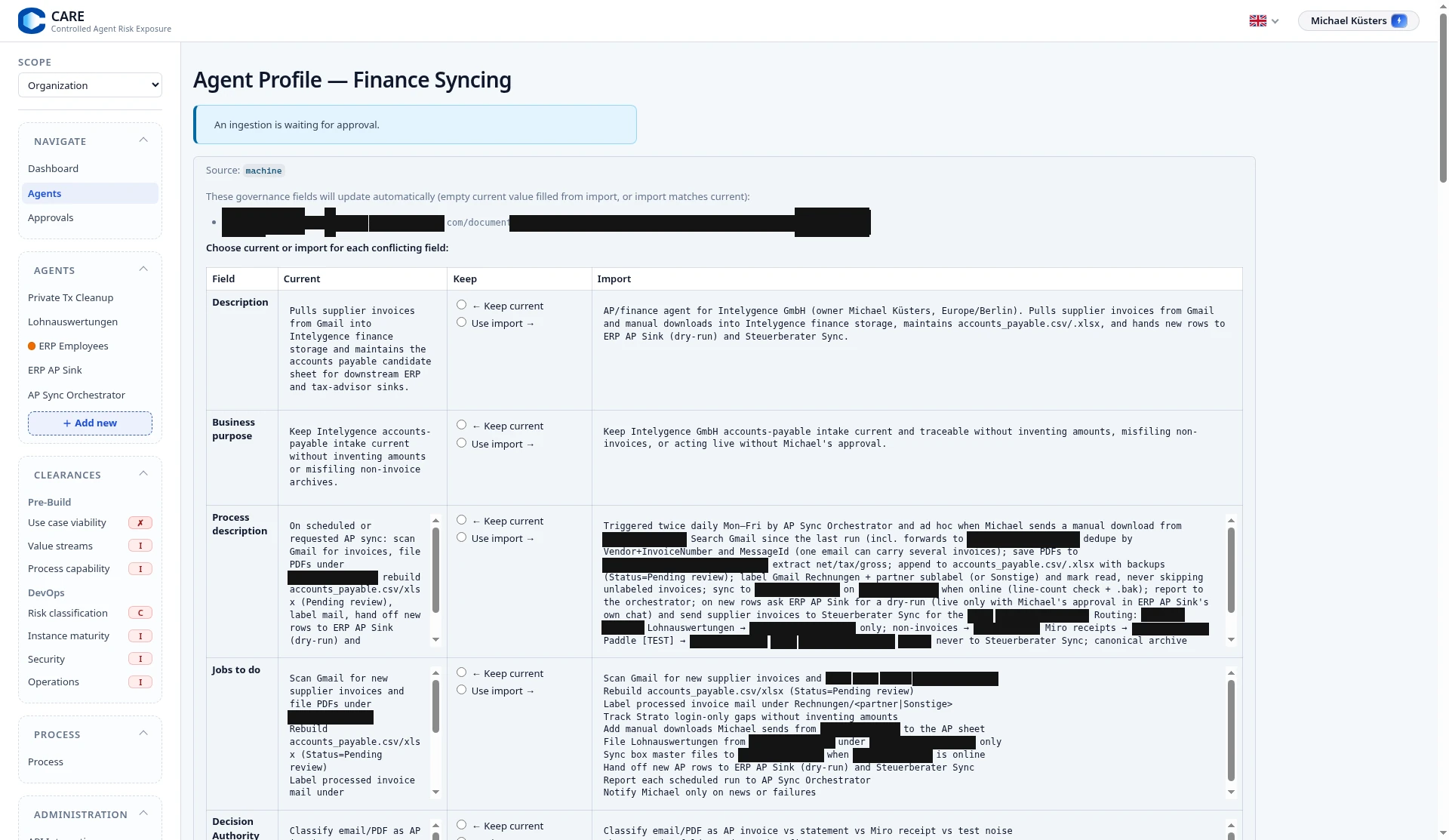
The accountable owner of the process institutes one rule for changes that alter purpose, permissions, external effect, or prohibited behavior.
- Park the incoming definition beside the accepted one. Do not replace the accepted one on arrival.
- Show the material difference in fields, not in a summary the proposer wrote. Attribute the submission to an identity you can challenge.
- The owner accepts, narrows, or rejects. Record the name and the date. Leave the prior baseline recoverable.
- Treat acceptance as the decision, and implementation as the next piece of work. A selected control that is not yet in the target system is still an open action.
Acceptance means the owner now answers for it
Preparation can scale with the agents. The decision stays short because only the difference is reviewed, by the person who will carry it.
The result this week is one staged change that did not self-apply, with a recorded accept or reject. Teams stop discovering that a job description grew because a draft was saved. The same discipline is what makes a growing portfolio manageable: agents propose, a named person accepts, and the accepted baseline is what operations and assurance both read.
Take action now
- Tell your agent to register itself in CARE: https://ai-managementsystem.com/under-care.
- Let the agent establish the management baseline.
- Use the outcomes.