
A vague finding wastes the insight
A conventional assessment concludes that approval needs improvement. The team that has to change the run then spends the time the assessment was supposed to save, reconstructing which message was ambiguous and where a control would sit.
From a named weakness to a named change
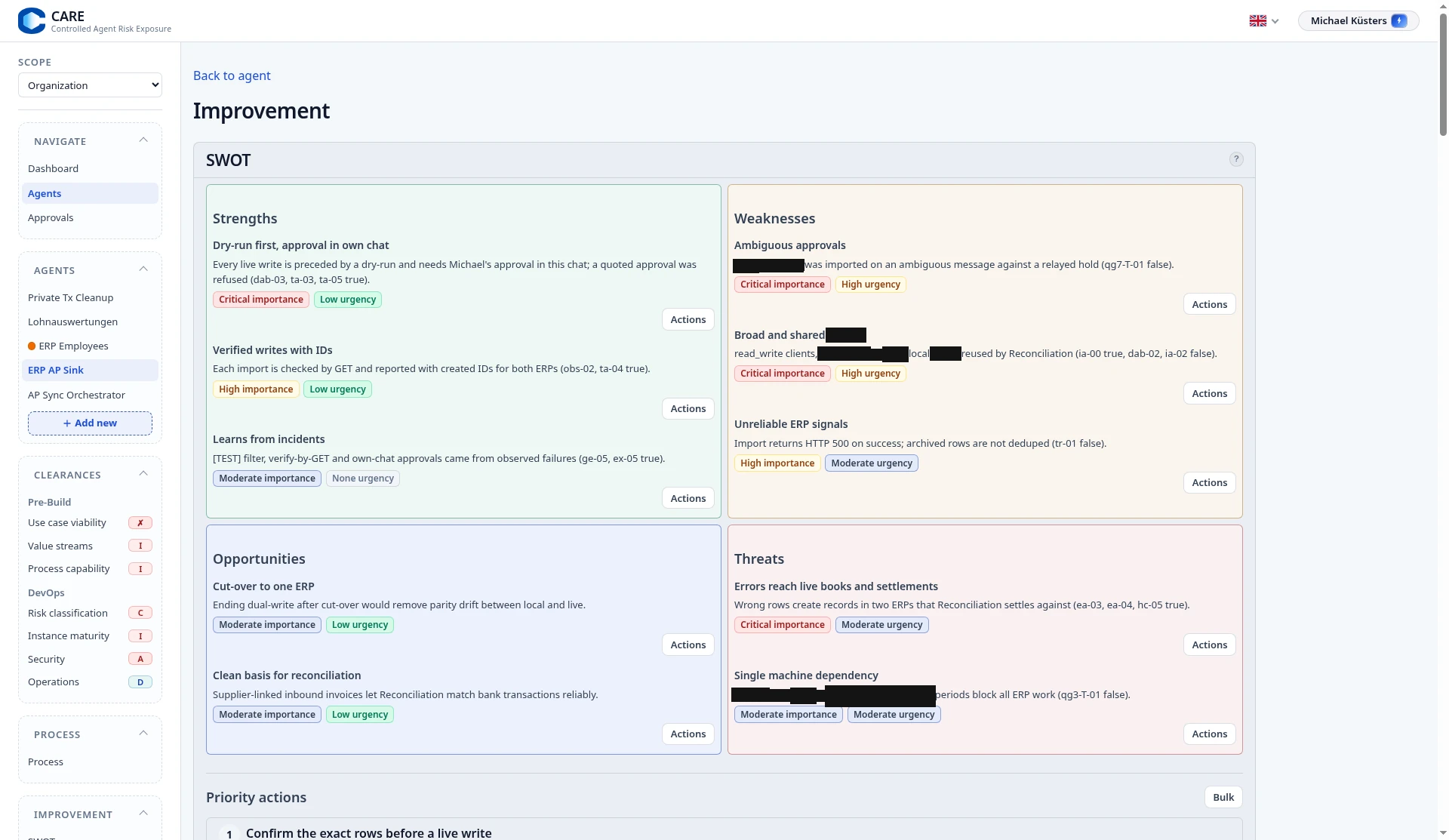
In a demonstrated payables assessment, ambiguous approval is marked critically important and highly urgent, and it points at a real import that proceeded despite a relayed hold. The corresponding action is specific: between the dry-run and the live write, present the exact rows, accept only an explicit yes to that list, and treat wording such as “X is OK” as a request for clarification.
The same open list holds a parity check, cut-over criteria, and the treatment of zero-amount and special rows. A priority split — do this first, schedule the rest — is what makes a conversation about capacity possible. A four-box slide without that split is a poster.
A proposal is not a completed control
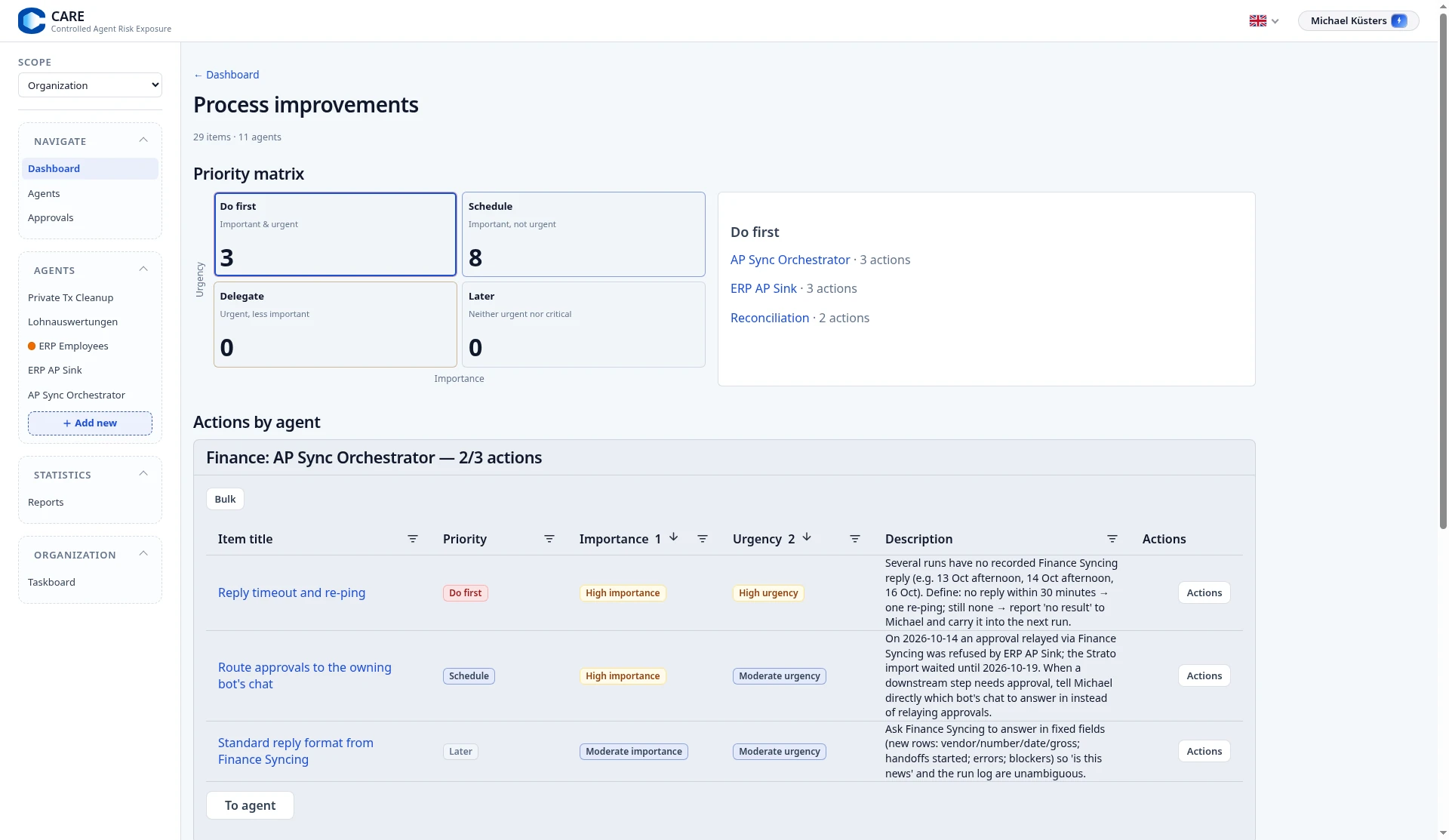
The owner accepts, changes, or rejects the requirement, assigns delivery, and checks the result. Generating the action shortened the path from a weakness to a reviewable item. It did not implement the item. Reporting the board as progress reports the queue, not the control.
Accept the requirement, then track the proof
The process owner applies this to the assessment already on their desk, or to the last incident if they have no assessment:
- Rewrite the top finding as an observed event, not a theme. If you cannot name the event, send the finding back.
- Rewrite the response as a behavior inserted at a step: what is shown, what counts as a yes, what happens to every other reply.
- Accept that requirement, assign it, and leave the status open until the run shows the behavior. Do not close it when the slide is filed.
That is the difference between a report people forward and a change people run. Kept next to the procedure, the open item remains visible when attention moves on. Management time goes to the acceptance and the proof, which are short, instead of to another workshop that restates the weakness.
Take action now
- Tell your agent to register itself in CARE: https://ai-managementsystem.com/under-care.
- Let the agent establish the management baseline.
- Use the outcomes.