
A handover needs more than a workflow diagram
A receiving operator has to understand what starts the process, which systems and identities it depends on, which outputs matter, which decisions require a person, and how errors are handled. Traditional first-day material omits the exceptions an experienced operator handles without writing them down. The recipient then learns the process by breaking it.
Assemble the operating facts, including the incomplete ones
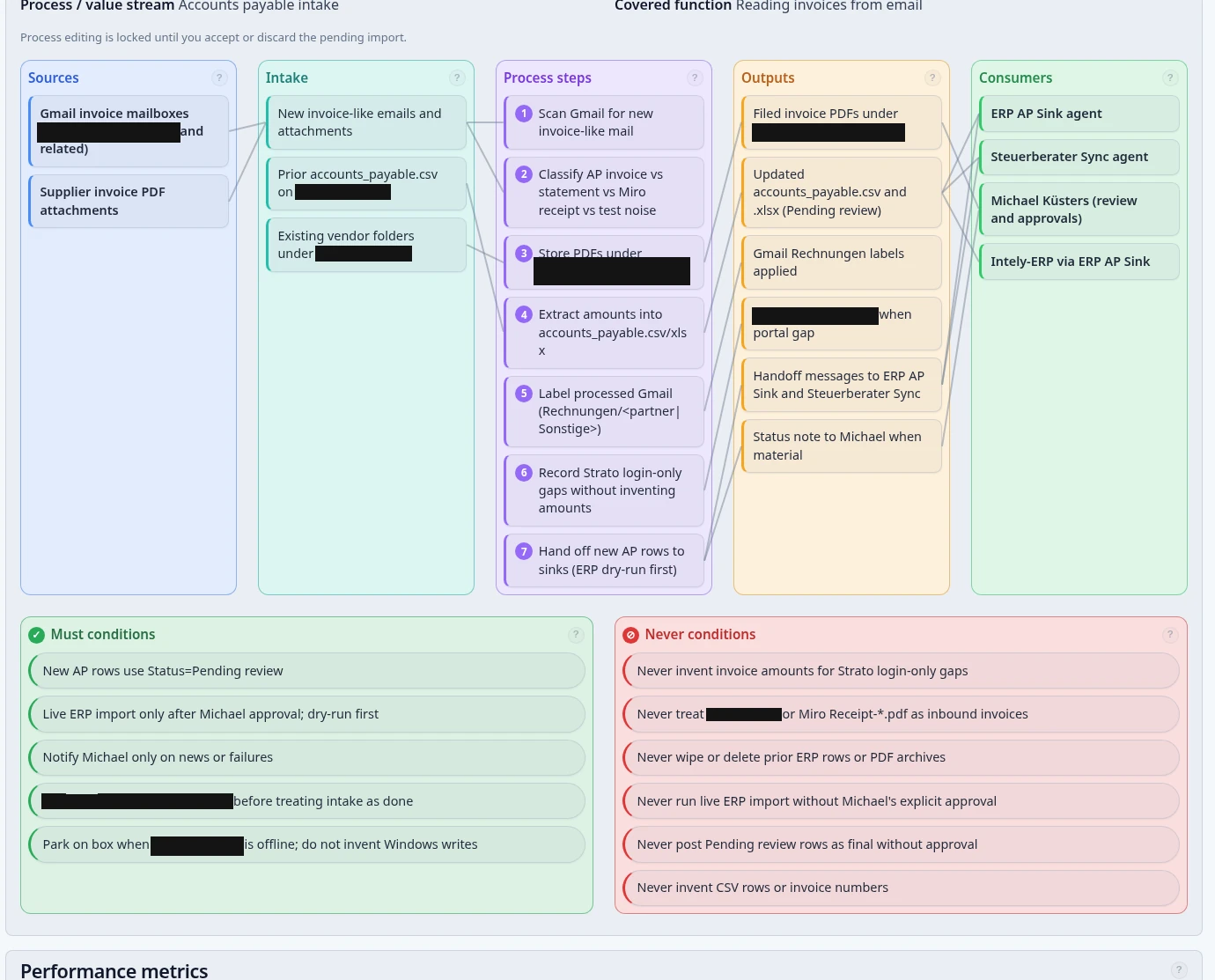
A demonstrated payables package contains the supplier-to-consumer map, a procedure with checkpoints, Must and Never conditions, performance aims, findings, an open-action list, and a priority. It names the human authority and the systems affected. It also says where handover would be incomplete: automated parity does not yet exist, response-time targets are undefined, cut-over criteria are not agreed, and there is no documented rollback for a wrong import.
Those gaps are transition work. They are not a reason to hide the package, and they are not a reason to call the transition done. The receiving team can review the definition, verify access, test the exception paths, and agree which gaps close before responsibility moves.
The receiving team rehearses, then someone accepts
Assembling the material is not acceptance of the transfer. The current owner and the future operator each sign what they are taking. Authority does not move because a file was shared. A rehearsal of the routine run and of one known failure is the evidence that the description was good enough to operate. A file that cannot be rehearsed goes back.
What you can verify before responsibility moves
The owner preparing a handover builds the package from facts already in the operation:
- Give the recipient steps and checkpoints sufficient to rehearse a routine run, plus the exception you already know.
- Name the owner and the approval path that remain after the move. Do not let decision rights transfer by implication.
- List the open service and recovery issues. Agree which ones block the transfer. Accept the transfer only for the scope the rehearsal covered.
You have made handover a management act that can happen without a months-long rediscovery. The same description is what you keep when the provider later changes: the work is specified above the team that happens to run it today.
Take action now
- Tell your agent to register itself in CARE: https://ai-managementsystem.com/under-care.
- Let the agent establish the management baseline.
- Use the outcomes.