
Working is not the same as reliable
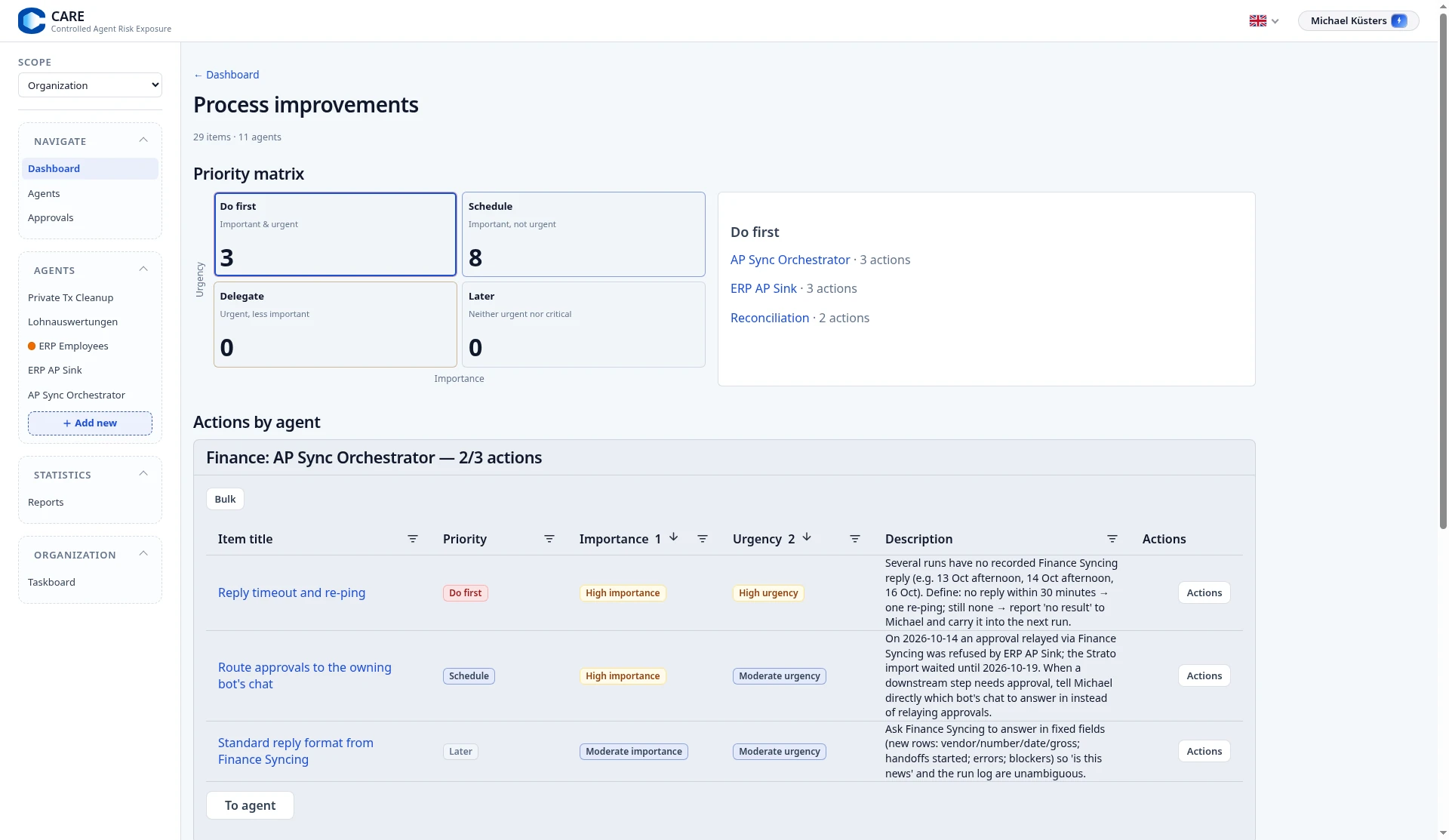
A demonstrated invoice import already writes invoices and links suppliers. The visible improvement list is still open: echo the exact rows before a live write, stop when an owner’s instruction conflicts with a relayed one, compare local and live records, define when dual-write may stop, and decide the zero-value and reverse-charge rows. That combination is ordinary. The happy path works. The exceptions are uneven.
Two changes protect the decision
An approval echo forces the intended row list into the open and waits for an explicit yes to that list. A conflict rule forces a stop when a direct hold disagrees with a handoff that says import. Together they prevent uncertain authority from becoming an irreversible write. Both are still proposals until the owner accepts them and the run actually behaves that way.
Three changes make the next run predictable
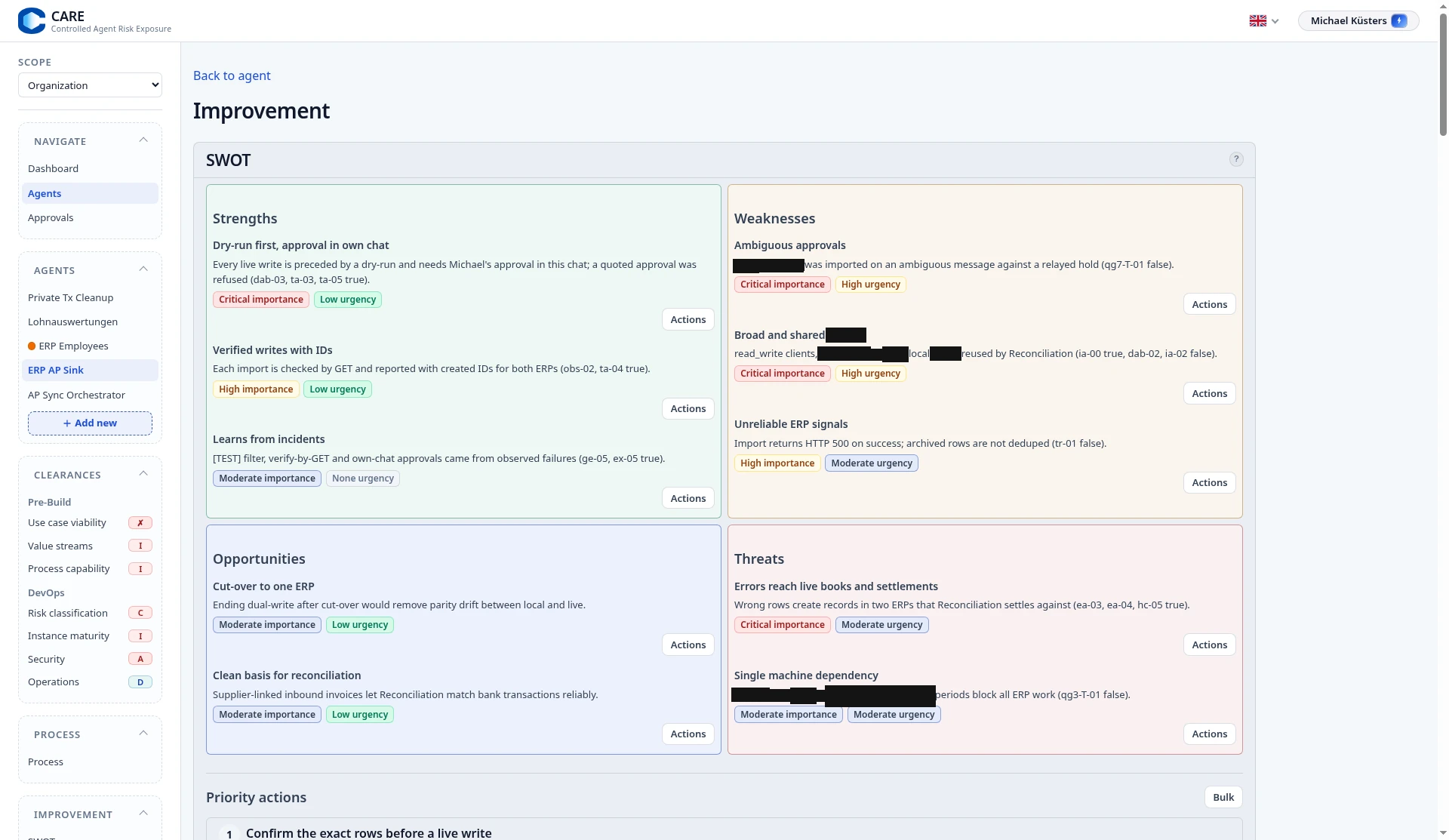
A parity check would compare the two ERP copies at the end of the import. Cut-over criteria would say when the spreadsheet and the dual-write may cease. Special-row rules would say what happens to zero-value and reverse-charge cases. None of these changes the purpose of the process. They make the future run predictable for someone who was not there when the exceptions were discovered.
Close a control, or keep it open on purpose
The process owner picks the list for their own live process. If they do not have these five, they write the five that match their last incidents. Then they refuse to count a proposal as progress.
- State each change as a behavior: what the run must do, and what evidence shows it did.
- Accept or reject each one. Assign an owner and a proof for every acceptance. Leave the others visibly open.
- Call the process more reliable only for the items whose proof exists. Report the count of completed controls, not the count of actions on a board.
That is a management system improving the work, not merely describing it. The backlog stays attached to the procedure so the next improvement starts from facts. You do not need a program to close the first control. You need the owner to choose it and the run to show it.
Take action now
- Tell your agent to register itself in CARE: https://ai-managementsystem.com/under-care.
- Let the agent establish the management baseline.
- Use the outcomes.