
Almost ready is the status that misleads
Teams declare readiness when the procedure reads well. The procedure can be excellent and the operation can still depend on one machine, a shared token, or an undefined reversal. Document count is not evidence of those facts.
Read one process for what is present and what is open
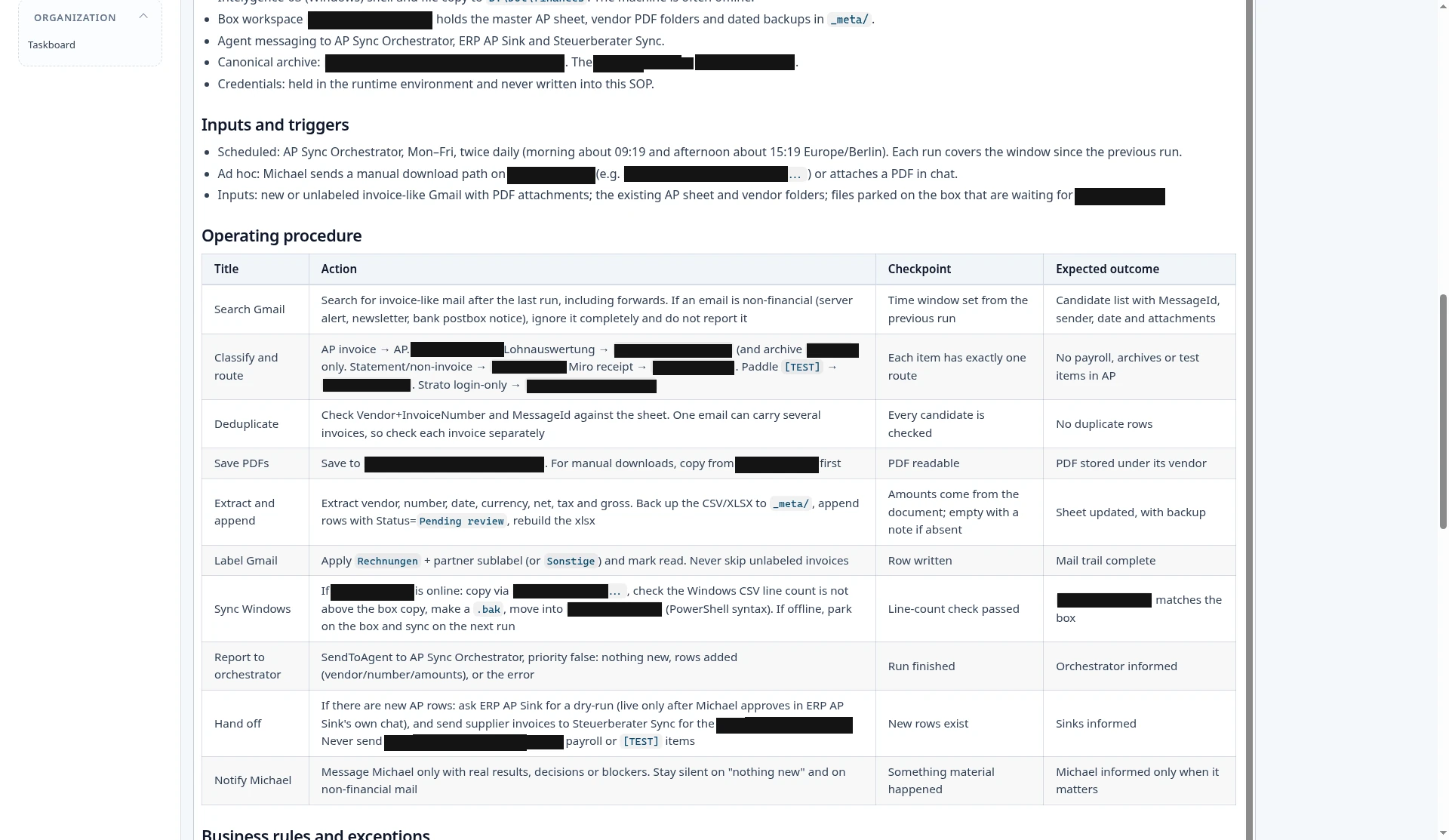
A demonstrated accounts-payable definition already shows a readable procedure, an owner’s approval, a dry-run, idempotency, verification after a misleading error, and rules drawn from incidents. The same material shows what is not there: no automated comparison between the two ERP copies, no agreed response-time target, cut-over criteria still to be agreed, and no documented reversal of a wrong import.
Both lists are the point. A handover or a go-live that publishes only the first list is how “almost ready” becomes an operating surprise.
Accept a scope, not a vibe
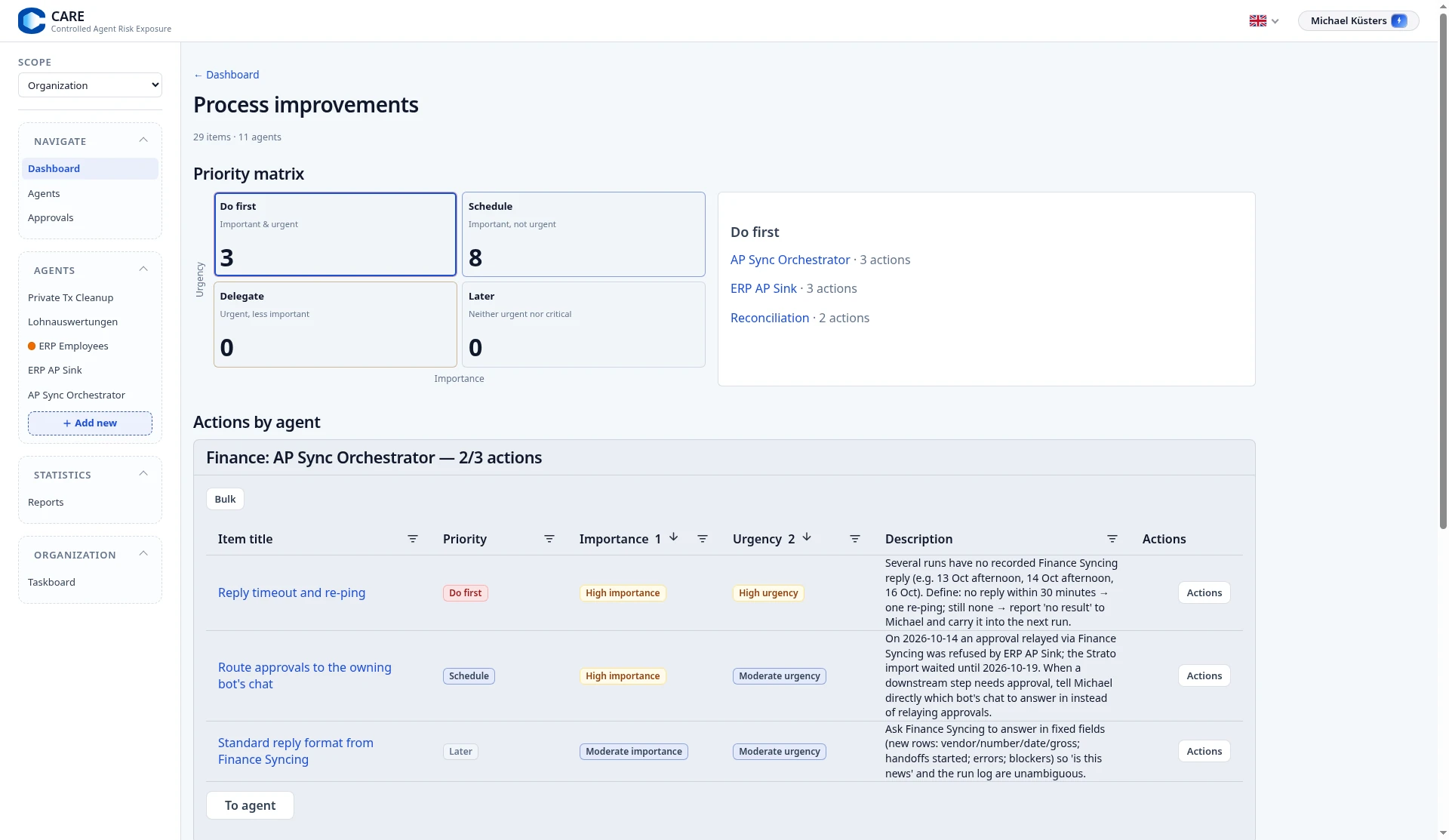
A supervised pilot can be acceptable while an outsourced production service is not. The owner defines the scope, which controls are mandatory inside it, which gaps are temporarily accepted, which tests must pass, and who responds when it breaks. An open action remains open. It is not converted into readiness by being written down.
The readiness decision you can record
The process owner does this before the next claim that a process is ready to leave the people who built it:
- Write the scope in one sentence: who operates it, for which cases, under whose watch.
- List the controls you can show — procedure, approval, verification, prohibitions — and the gaps you cannot: recovery, parity, timing, cut-over, credentials.
- Accept the scope with the gaps named, or refuse it. A pilot acceptance states the expiry and the person on point. It does not say “production.”
Keeping definition and open actions in one record is what makes the next readiness decision faster. The decision itself does not require a new tool. It requires the honesty to leave the gaps on the page you are about to sign.
Take action now
- Tell your agent to register itself in CARE: https://ai-managementsystem.com/under-care.
- Let the agent establish the management baseline.
- Use the outcomes.