
Permissions are necessary, and they are not the whole risk
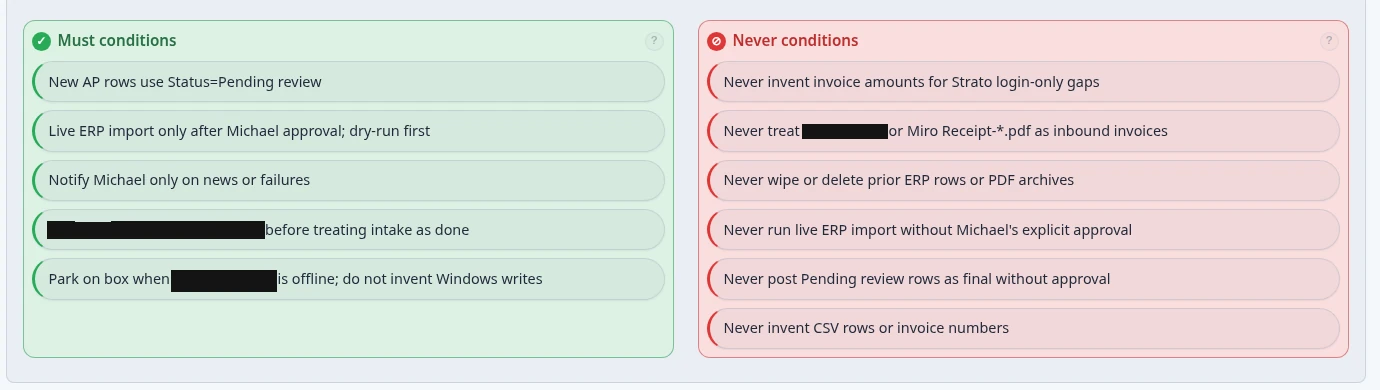
A support agent may read customer records, summarize issues, contact colleagues, and store reports. Each action can sit inside its assigned tools. The sequence can still place sensitive information in an environment or in front of an audience that should never see the combination.
A redesign can make a safe path unsafe
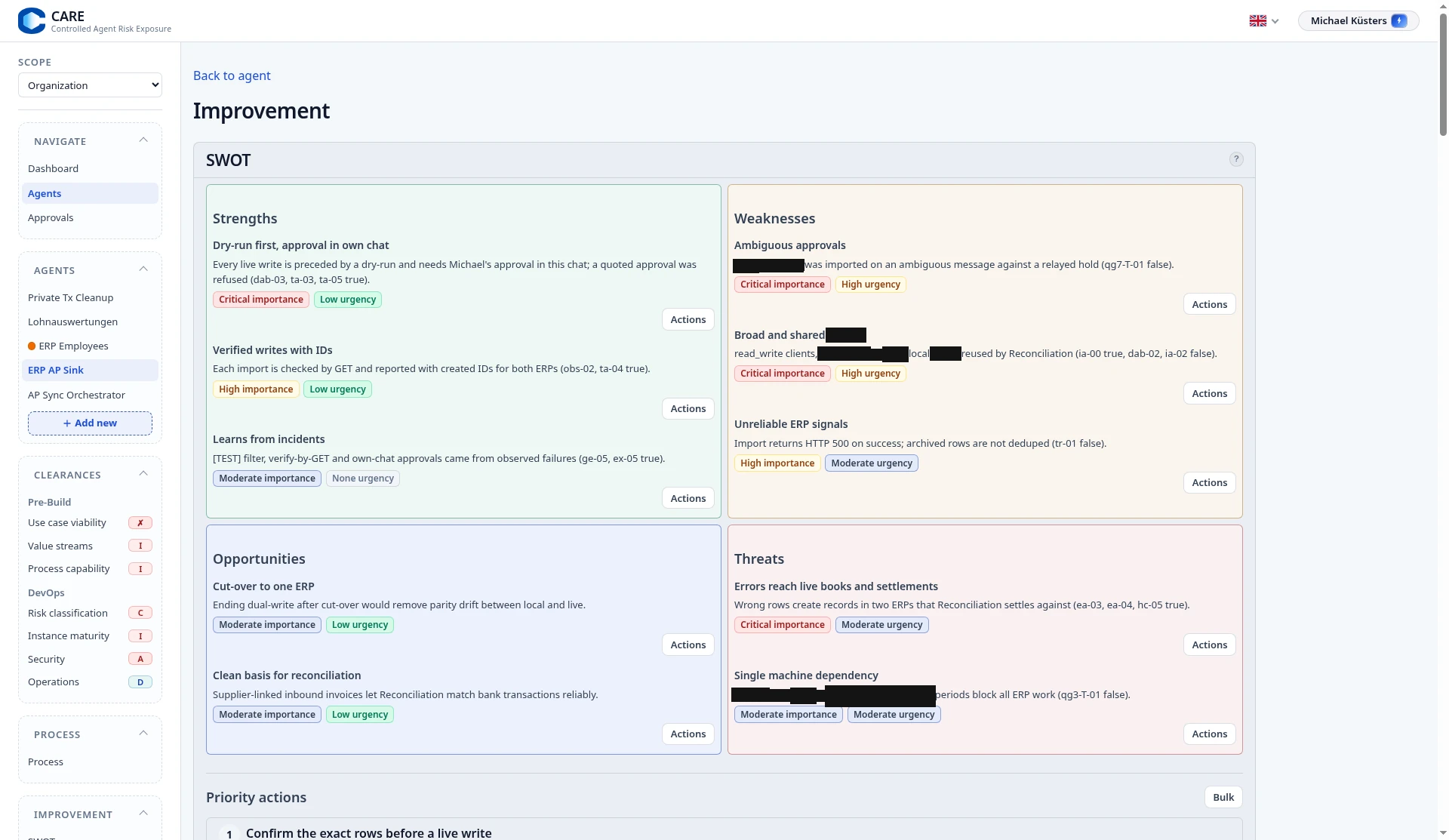
Routing a report to a different consumer changes exposure without adding a tool. An optimization project that only checks “is this step allowed?” will ship that change. The useful assessment asks whether outputs, recipients, and authority are still appropriate together.
Put responsibilities, dependencies, steps, prohibitions, and escalation on one page so the combination can be seen. A finding that names the new recipient is more useful than a fresh permission ticket.
Convert the combination into an operating decision
The process owner decides. They can require a review point, narrow the recipient list, separate duties, or forbid a particular combination. Claims that the decision is already enforced belong to the systems that send and store the output. Until those systems implement it, the decision is an accepted requirement, not a barrier.
- Take one live path that stores or sends combined information. List permitted actions in order, then the actual destinations.
- Circle the combination that increases exposure. Confirm the business need for that audience.
- Specify the guardrail: approval, filtering, a narrower store, or segregation. Name the implementer. Record the owner’s acceptance of whatever remains.
What you can verify this week
| Check | You have it when |
|---|---|
| Path | Destinations and downstream effects are written next to the steps |
| Audience | Each recipient has a stated business need |
| Decision | A guardrail is assigned, or the residual exposure is accepted by name |
The result is a process the owner can explain, including the combination they chose to allow. That explanation is what you hand to the next redesign so it does not recreate the exposure while “improving” the flow. Management moves at the speed of the redesign instead of discovering the audience change in an incident.
Take action now
- Tell your agent to register itself in CARE: https://ai-managementsystem.com/under-care.
- Let the agent establish the management baseline.
- Use the outcomes.