
Small businesses adopt AI before AI departments

The tools are already on the desk. A wrong customer message, a leaked personal detail, or an altered commercial record hurts a fifty-person firm at least as much as it hurts a multinational, because there is no second team to catch it. Copying that multinational’s committee is how management gets postponed until after the incident.
A manufacturer adds two consequential agents
A small manufacturer uses one agent to compare suppliers and another to draft customer replies. There is no AI office and no spare week for a workshop. Both agents can already change what the firm promises.
The first hour has to answer practical questions: who owns each agent, what it is for, what it must not do, which data it can see, and when it stops and asks. A short restriction the operator actually uses beats a policy nobody opens.
Five decisions, two agents, one owner
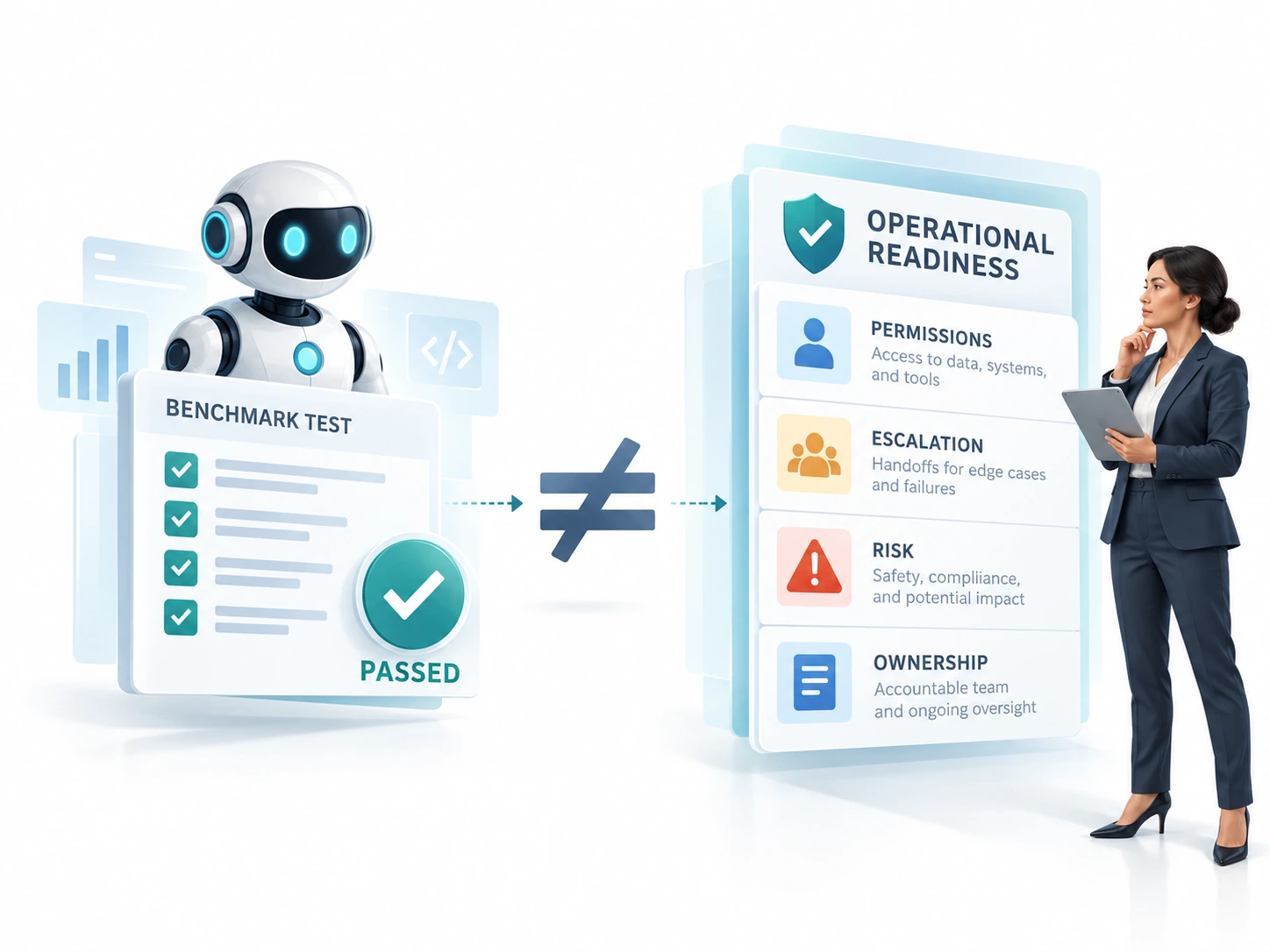
The managing director, or the one employee they will actually hold to it, does this for every agent that can move money, contact a customer, or read sensitive records. Internal drafting can wait, and still gets an owner and a purpose when its turn comes.
- Ask the agent to describe its purpose, inputs, outputs, system access, prohibited acts, and the situations it should escalate. Treat the description as a draft. The agent has not seen every obligation you have.
- Correct five lines yourself: owner, purpose, must-not-do, data it may touch, and who it asks.
- Accept the corrected draft in writing. If you cannot correct it, the agent does not gain new access this month.
Proportionate management is still management
Two agents are under a decision you made, in language your operator can follow, without hiring a function to produce it.
That is the result. You can add the next agent the same way, in the same hour, because the questions do not change. The firm stays fast. The owner remains the person who can explain, to a customer or an insurer, what the agent was allowed to do. A shared baseline is how those five lines survive the next holiday and the next hire. The lines themselves can be written today.
Take action now
- Tell your agent to register itself in CARE: https://ai-managementsystem.com/under-care.
- Let the agent establish the management baseline.
- Use the outcomes.